
How Property Management and Marketing Collaboration Transforms Vacancy Rates
Marketing property management works when promotion and operations function as a single system, not separate departments. The strategy reduces vacancy rates by an average of 15 to 30 percent while improving tenant quality through coordinated messaging that attracts the right renters and supports retention from the first contact through lease renewal.
The collaboration between marketing and property management teams creates a feedback loop that transforms how properties perform in competitive markets. Marketing professionals gain insights into tenant preferences, maintenance response times, and amenity usage patterns that shape more effective campaigns. Property managers receive pre-qualified leads and data-driven positioning strategies that fill units faster with residents who stay longer. This partnership matters especially in 2026, as rental markets across North America, Europe, and Asia-Pacific show increased sensitivity to online reviews, visual presentation, and community engagement.
Budget-conscious property owners often view marketing as an expense rather than an investment in operational efficiency. The reality proves different. Well-executed marketing reduces turnover costs, which typically run between one and three months’ rent per unit when accounting for vacancy periods, cleaning, repairs, and advertising. A coordinated approach addresses these costs at multiple points: professional photography and staging minimize days on market, targeted digital campaigns reach qualified prospects quickly, and tenant communication strategies improve satisfaction scores that drive referrals.
The framework outlined here demonstrates how property managers and marketing specialists can build workflows that serve both immediate leasing goals and long-term asset value, with particular attention to international markets where cultural nuances shape tenant expectations and budget allocation requires measurable returns.
Why Traditional Property Management Leaves Marketing as an Afterthought
Property managers carry a relentless operational load. They handle tenant complaints at midnight, coordinate emergency repairs, track rent payments, and ensure compliance with evolving regulations. Marketing, from this vantage point, becomes the thing you do when you finally have time, a necessary task rather than a strategic partner. The property manager’s calendar is dominated by leaking pipes and lease renewals, not brand positioning or visual storytelling.
Marketing teams, meanwhile, operate in a different world entirely. They think in aesthetics, emotional resonance, and visual narratives that stop scrollers mid-feed. Their expertise lies in lighting, staging angles, and the psychology of colour palettes. They know how to make a space look aspirational. What they often lack is ground truth: the operational realities that define how tenants actually experience the property day to day.
This structural divide creates predictable problems. A marketing team might showcase a stunning rooftop terrace without knowing the property manager has struggled for months to get residents to follow usage rules, creating noise complaints that drive turnover. Beautiful listing photos highlight gleaming appliances, but the copy says nothing about the responsive 24-hour maintenance the property manager has built as a competitive advantage. The messaging celebrates “luxury finishes” when prospective tenants in this neighbourhood actually care more about walkability and pet policies, information the property manager knows intimately but never shares.
The result is properties that photograph beautifully but convert poorly. Listings attract the wrong inquiries because the marketing emphasizes features that don’t match what makes tenants stay. Showings disappoint because expectations set by aspirational imagery don’t align with the solid, well-managed reality the property offers. You’re marketing a lifestyle while managing a home, and when those narratives don’t converge, both vacancy rates and tenant satisfaction suffer. The property manager knows why people love living there; the marketing team knows how to tell that story. Keeping them in separate lanes wastes both skill sets.
The Strategic Framework: Where Management Insight Meets Marketing Execution

Translating Property Features into Lifestyle Benefits
Property managers know every detail about their buildings, the new HVAC system installed last quarter, the secured bike storage, the proximity to the metro station. But prospective tenants don’t rent features. They rent the life they imagine living.
This is where collaboration transforms vacancy rates. When property managers share their operational knowledge with marketing teams, those concrete details become emotional triggers. The new HVAC system isn’t about efficiency ratings; it’s about consistent comfort during work-from-home days and lower utility bills that free up budget for weekend adventures. Secured bike storage becomes an active lifestyle enabler for urban professionals who cycle to downtown offices. That metro proximity? It’s reclaimed time, mornings without traffic stress, evenings that start thirty minutes earlier.
Marketing specialists who understand tenant data can identify which features matter most to your target demographic. A property manager might mention updated kitchen appliances as a maintenance win; the marketing team recognizes it as the dinner-party centerpiece for young professionals building their social lives. This is where thoughtful presentation choices, from home glam decor that elevates listing photos to copy that speaks to aspirations rather than specifications, make the difference between inquiries and applications.
The most effective collaboration happens when property managers articulate not just what exists, but who it serves best. Marketing then builds narratives around those tenant profiles, transforming maintenance logs and amenity lists into stories prospective renters see themselves living.
Creating Marketing Materials That Reflect Property Reality
Marketing materials that promise luxury amenities, pristine conditions, and resort-style living create serious problems when the actual property tells a different story. Property managers know what happens next: frustrated showings, immediate rejections, and tenants who break leases early because reality didn’t match the photos.
Authentic marketing starts with honest conversations between management and creative teams before any camera equipment arrives. If the property has older appliances, worn flooring, or dated fixtures, your marketing should position these truthfully, perhaps emphasizing affordability, character, or upcoming renovation plans rather than pretending the property competes with new construction.
The styling choices matter tremendously here. A property manager dealing with a unit that serves budget-conscious tenants shouldn’t approve marketing photos featuring expensive furniture and high-end accessories that create false expectations. Instead, minimalist decor often works better, it showcases the space honestly while maintaining appeal, letting prospective tenants envision their own belongings without feeling misled.
This alignment protects everyone. Tenants arrive for showings with appropriate expectations, property managers waste less time on poor-fit prospects, and the eventual lease starts with trust rather than disappointment. Marketing materials should highlight genuine strengths, location advantages, responsive maintenance, community features, that property managers can actually deliver consistently throughout the tenancy.
Building Your Collaborative Workflow: From Listing to Lease
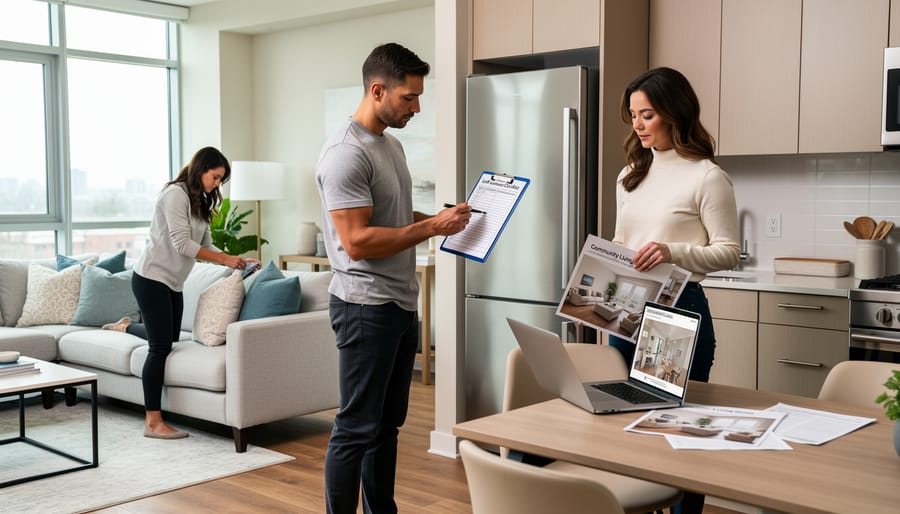
The most effective property-marketing partnerships don’t emerge when the “For Lease” sign goes up, they begin weeks earlier, with both sides contributing to a shared acquisition strategy.
Start your collaboration during the pre-listing walk-through, before any staging or photography happens. Property managers should bring maintenance records, recent tenant feedback, and knowledge of what’s drawn interest in similar units. Marketing specialists need this ground truth: knowing that the corner unit gets exceptional afternoon light or that prospective tenants consistently ask about pet policies shapes every subsequent creative decision. This initial meeting prevents the costly mistake of marketing features that don’t exist while overlooking genuine selling points only managers recognize from daily operations.
Staging decisions follow naturally when both perspectives inform the choice. A property manager knows whether the unit appeals to young professionals, families, or downsizing retirees based on location, layout, and rent point. Marketing translates this insight into visual direction, whether to style the second bedroom as a home office or nursery, how to arrange furniture to showcase flow, and which lifestyle signals resonate with the target demographic. When budget constraints limit physical staging options, managers can identify which rooms drive leasing decisions (typically living areas and primary bedrooms) so marketing resources concentrate where they matter most. Common design challenges like TVs and fireplaces competing for wall space need practical solutions that both showcase the space beautifully and acknowledge how tenants actually live.
Photography timing deserves joint planning. Schedule shoots after any needed repairs but before listing urgency forces compromises. Marketing teams need sufficient time to capture multiple angles, lighting conditions, and detail shots, while property managers must coordinate access without disrupting current occupants or rushing turnover work. A rushed photoshoot with poor lighting or incomplete staging wastes the entire marketing budget, images are your primary tenant acquisition tool.
Coordinate your showing strategy before the first inquiry arrives. Decide together which features the property manager emphasizes during tours (practical elements like storage, parking, maintenance responsiveness) and which aspects marketing materials have already established (lifestyle, aesthetics, neighbourhood advantages). This prevents redundancy and creates a cohesive experience where visual promise and operational reality reinforce each other. Both parties should review inquiry patterns weekly, if prospective tenants consistently ask questions your marketing didn’t address, adjust your materials rather than answering the same question fifty times.
Virtual and In-Person Staging: A Joint Decision
Choosing between virtual styling and physical staging isn’t a marketing decision alone, it requires property management input on timing, condition, and realistic budget constraints. The most effective approach combines management’s operational knowledge with marketing’s understanding of what converts prospects into applicants.
Physical staging delivers tangible impact when property managers can accommodate the logistics. A vacant three-bedroom home in a competitive market justifies the investment when management knows the property will show well for at least six weeks and can coordinate access for staging professionals. Physical staging works best for premium rentals where the target market expects move-in-ready presentation and where management has verified the property’s condition supports professional-grade photography and showings.
Virtual staging serves management needs when timeline or condition issues make physical staging impractical. A property requiring minor repairs before it photographs well, or one located remotely where coordinating physical staging creates scheduling challenges, benefits from virtual solutions. Property managers working across multiple locations particularly value virtual styling’s flexibility, designers can transform spaces digitally while managers handle operational priorities on-site.
| Approach | Budget Range | Best Management Scenarios | Timeline |
|---|---|---|---|
| Virtual Styling | $50-200 per room | Quick turnovers, remote properties, minor repairs needed, testing market positioning | 2-5 days |
| Targeted Physical Staging | $500-1,500 | Key rooms only (living, master), moderate vacancy costs, standard rental market | 1-2 weeks |
| Full Physical Staging | $2,000-5,000+ | Premium properties, high vacancy costs, showings scheduled regularly, 6+ week timeline | 2-3 weeks |
The hybrid approach often makes the most management sense: virtual styling for initial online listings to generate interest quickly, with the option to add select physical decor accessories or key furniture pieces if the property doesn’t generate showing requests within two weeks. This strategy keeps initial costs low while maintaining flexibility to invest more if market response demands it. Property managers should establish clear performance metrics with marketing teams, if virtual staging doesn’t produce qualified showings within a defined period, the collaboration shifts to physical staging with a revised budget allocation.
The International Perspective: Remote Collaboration for Property Marketing

Remote property marketing collaboration demands systems that work across time zones and languages without sacrificing quality or speed. Property managers overseeing portfolios in multiple cities, or working with international owners, need digital infrastructure that keeps marketing consistent while respecting geographic realities.
Start with a central digital asset library. Cloud storage platforms like Dropbox or Google Drive work, but specialized tools like Brandfolder or Bynder offer version control and approval workflows that prevent outdated floor plans or superseded photography from reaching prospective tenants. When your London office updates brand guidelines, your Singapore team should see those changes immediately, not three weeks later when someone forwards an email.
Time zone differences require asynchronous communication protocols. Instead of demanding real-time meetings, successful international teams rely on detailed briefs and recorded video walk-throughs. A property manager filming a two-minute property tour on their phone, highlighting specific features and condition notes, gives remote marketing teams context that dozens of photos cannot convey. Tools like Loom or Zoom recordings work well; the key is making feedback visual and specific.
Establish decision-making authority clearly. Define which choices require consensus (brand positioning, target tenant profiles) versus which the local team can make independently (showing schedules, minor styling adjustments). Ambiguity about approval chains kills momentum when properties sit vacant.
Consider language carefully. If your properties serve international tenants, marketing materials should feel locally relevant rather than obviously translated. Work with native speakers in target markets, not just for language accuracy, but for cultural nuances in how you present amenities, neighborhood benefits, and lifestyle positioning. A collaborative approach respects local expertise while maintaining brand consistency.
Measuring Success: Marketing Metrics Property Managers Should Track
Most property managers track when a unit fills, but few measure how marketing drives that outcome. The metrics that matter sit at the intersection of marketing effectiveness and management priorities, where creative decisions become business results.
- Days on Market (DOM)
- The total time from listing publication to lease signing, revealing how quickly your marketing attracts qualified tenants. A DOM consistently above market average signals messaging misalignment or presentation problems, not just market conditions.
- Inquiry-to-Showing Conversion
- The percentage of initial contacts that convert to scheduled property tours, measuring whether your marketing sets accurate expectations and attracts genuinely interested prospects. Low conversion suggests your visuals promise something your property doesn’t deliver.
- Showing-to-Application Rate
- How many tours result in rental applications, indicating whether the in-person experience matches the marketed promise. Strong marketing creates high showing-to-application rates because qualified prospects arrive already convinced.
- Marketing Cost per Lease
- Total marketing investment divided by signed leases, providing the true cost of tenant acquisition. This metric justifies higher-quality staging or photography when it demonstrably reduces vacancy periods.
- Tenant Source Attribution
- Tracking which marketing channels (listing sites, social media, referrals, signage) generate leases, allowing strategic budget allocation toward proven performers rather than assumptions about where tenants come from.
Beyond immediate leasing metrics, marketing quality influences retention. Properties presented authentically during marketing create satisfied tenants who experienced what they expected, tenants more likely to renew and refer others. Track how marketing vintage (the campaign that attracted them) correlates with lease renewals at twelve months. Properties that consistently attract tenant referrals signal marketing that resonated deeply enough to inspire word-of-mouth.
The strongest indicator of marketing-management collaboration? Declining time-to-lease across your portfolio while tenant quality improves. When both trends move favourably, you’ve found the balance between attractive presentation and operational reality.
Budget Allocation: Investing in Marketing as Property Management
The most expensive marketing decision a property manager makes is choosing not to market at all. Every day a unit sits vacant costs between $50 and $200 in lost rent, depending on your market, making even a modest marketing investment profitable if it fills the property one week faster.
Start by calculating your true vacancy cost: monthly rent divided by 30 equals your daily loss. If you’re losing $80 per day, spending $500 on professional photography and virtual staging pays for itself in six days. This reframing transforms marketing from a discretionary expense into an insurance policy against prolonged vacancies.
Budget tiers break down logically across property types. For units under $1,500 monthly, allocate $300-$500 per listing toward professional photography, basic virtual staging, and multi-platform listing distribution. Mid-range properties ($1,500-$3,000) justify $800-$1,500 for enhanced photography, room-specific staging, drone footage if applicable, and targeted social media promotion. Luxury properties above $3,000 monthly warrant $2,000+ investments including video walkthroughs, comprehensive physical or virtual staging, and premium listing placements.
The highest-ROI investment isn’t the flashiest option, it’s professional photography. Quality images reduce average days on market by 30-50% across all price points. Virtual staging comes next, particularly for vacant units where prospective tenants struggle to visualize space potential. Social media advertising ranks third, extending reach beyond standard rental platforms.
Track your marketing spend against days-on-market reduction and rental rate achieved. Properties marketed comprehensively often command 5-8% higher rents while filling faster, creating compounding returns. Budget what vacancy actually costs you, not what feels comfortable to spend, and your marketing decisions become straightforward risk management rather than hopeful expenditure.
The vacancy crisis facing property managers in 2026 isn’t solved by better locks or faster maintenance response times alone. It’s solved when operational excellence meets strategic marketing, when the team managing your property understands tenant psychology as deeply as they understand lease terms.
Properties that fill quickly and retain quality tenants share a common thread: management and marketing work as integrated functions, not separate departments fighting for budget scraps. The manager who knows which amenities drive renewals informs the marketer who crafts listing copy that attracts ideal prospects. The stylist who understands your target demographic collaborates with the manager who screens applications. This partnership creates properties that don’t just look appealing, they attract tenants whose needs align with what you’re actually prepared to deliver.
The financial case is clear. Every week a unit sits vacant costs more than most marketing investments. But beyond filling vacancies faster, collaboration improves tenant quality, reduces turnover, and positions your properties as premium options worth higher rates.
Stop treating marketing as the thing you do when you have a problem. Start building relationships with partners who speak both languages, who understand that successful property presentation requires management insight and creative execution working in concert, not competition.