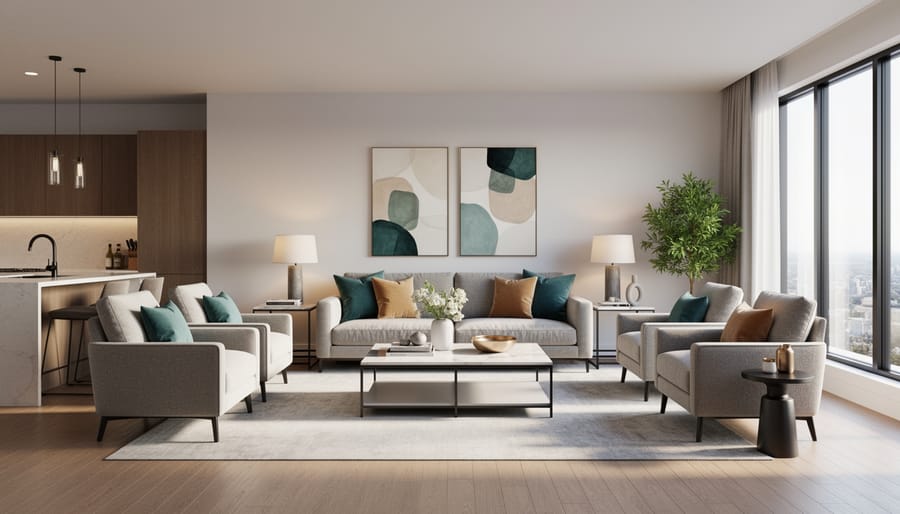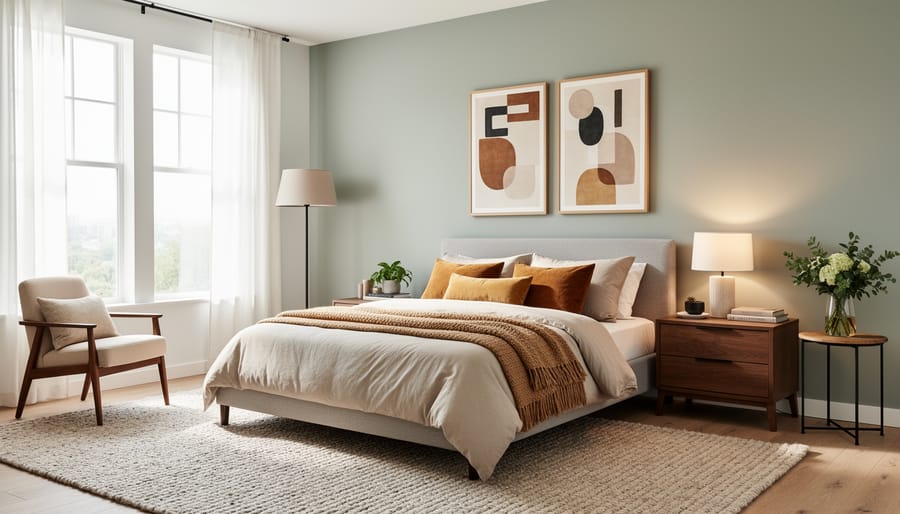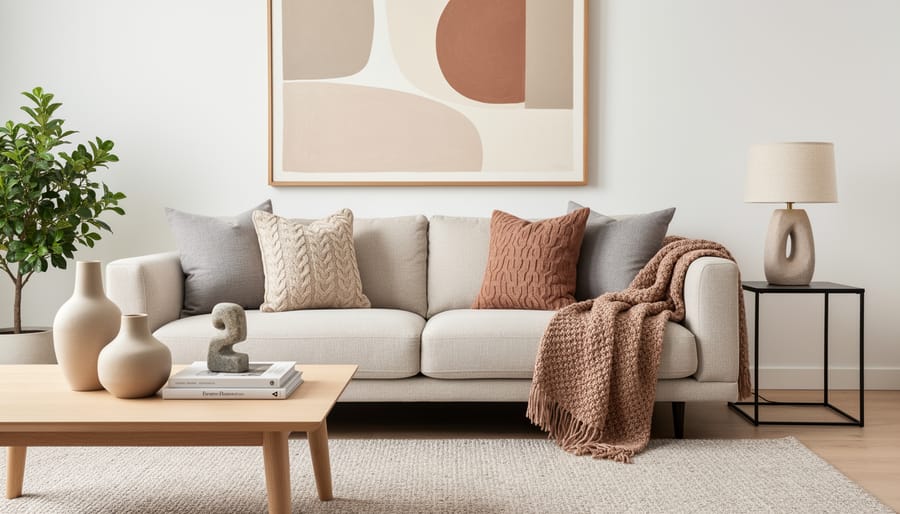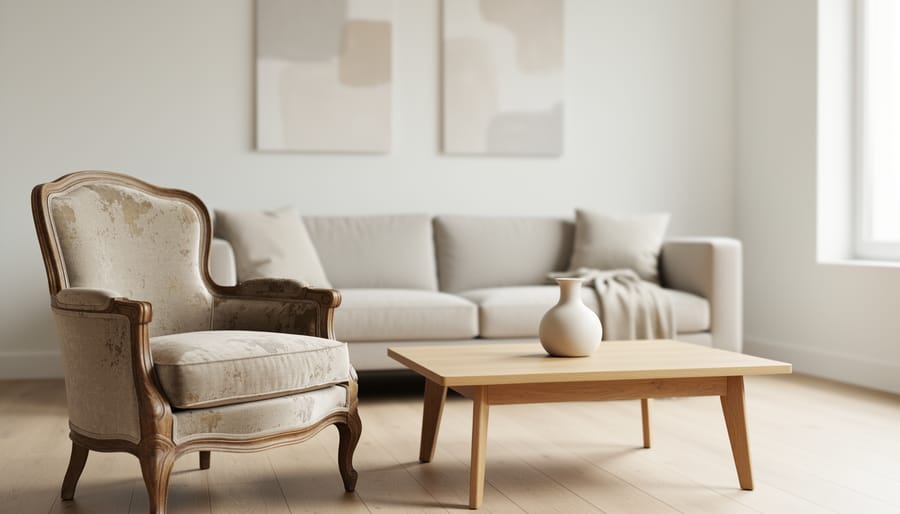
Minimalist staged living room with a vintage armchair and neutral furnishings, uncluttered surfaces, and soft natural daylight.

Why Minimalist Home Decor Is Reshaping How We Sell and Style Properties in 2026

Minimalist home decor transforms cluttered spaces into serene, functional environments by strategically removing excess and emphasizing quality over quantity. The approach centers on three core principles: intentional furniture selection, a restrained color palette anchored in neutrals, and disciplined editing of decorative objects to showcase only pieces that serve purpose or bring genuine joy.

The appeal extends beyond aesthetics. Simplified interiors reduce visual noise, creating calmer environments that many homeowners find easier to maintain and more pleasant to inhabit. For real estate professionals, minimalist staging has become a particularly effective tool because it allows potential buyers to envision their own lives in a space without the distraction of overly personalized decor. Clean lines and uncluttered rooms photograph well and tend to appeal across diverse buyer demographics.

Budget considerations matter less than many assume. Minimalism doesn’t demand expensive designer pieces or complete room overhauls. The practice often begins with what you remove rather than what you purchase. A single well-chosen vintage chair can anchor a room more effectively than three mediocre ones, and editing down existing possessions costs nothing. When new purchases are necessary, investing in fewer, higher-quality items that will endure typically proves more economical over time than cycles of disposable furniture.

The international influence on minimalist design brings valuable perspective. Scandinavian hygge emphasizes warmth within simplicity, Japanese wabi-sabi celebrates imperfection and natural materials, and European modernism contributes structural clarity. These traditions demonstrate that minimalism adapts fluidly across cultures and climates, offering flexible principles rather than rigid rules.

Successful implementation requires collaboration between vision and practicality. Homeowners benefit from understanding their actual living patterns before eliminating storage or seating, while designers and stagers must balance aesthetic restraint with the functional needs of daily life or effective property presentation.

The Core Principles Behind Minimalist Home Decor

Minimalist home decor isn’t about creating sparse, uncomfortable spaces, it’s a deliberate design philosophy built on principles that actually enhance how properties present and how people experience them. Understanding these foundations helps explain why this approach has become so valuable for staging and styling across different markets.

At its heart, minimalism operates through four interconnected principles that work together rather than in isolation:

Intentional Space Planning
Every square foot serves a clear purpose. Rooms are arranged to showcase flow and function rather than filling voids, helping potential buyers envision their own use of the space without distraction.
Functional Beauty
Objects present must justify their presence through both utility and aesthetic contribution. This dual-purpose approach eliminates decorative clutter while maintaining warmth and visual interest.
Quality Over Quantity
Fewer, well-chosen pieces create stronger impressions than numerous mediocre items. In staging contexts, this principle often reduces costs while increasing perceived property value.
Purposeful Editing
Active curation determines what stays and what goes. This ongoing process ensures spaces remain focused on their best features rather than becoming repositories for everything that might work.

These principles translate directly to staging effectiveness because they address how buyers process spaces. Uncluttered rooms photograph better and appear larger in person. Carefully selected furnishings allow architectural features to stand out rather than compete for attention. The visual calm created by edited spaces lets viewers focus on the property itself instead of getting caught up in decor choices that might not match their taste.

What separates successful minimalist staging from merely empty rooms is the balance between reduction and warmth. The goal isn’t to strip away personality but to create a foundation that feels both aspirational and livable. This requires understanding which elements contribute to that impression and which simply add noise, a distinction that becomes clearer when you’ve worked across different property types and buyer demographics.

Why Property Professionals Are Turning to Minimalist Staging
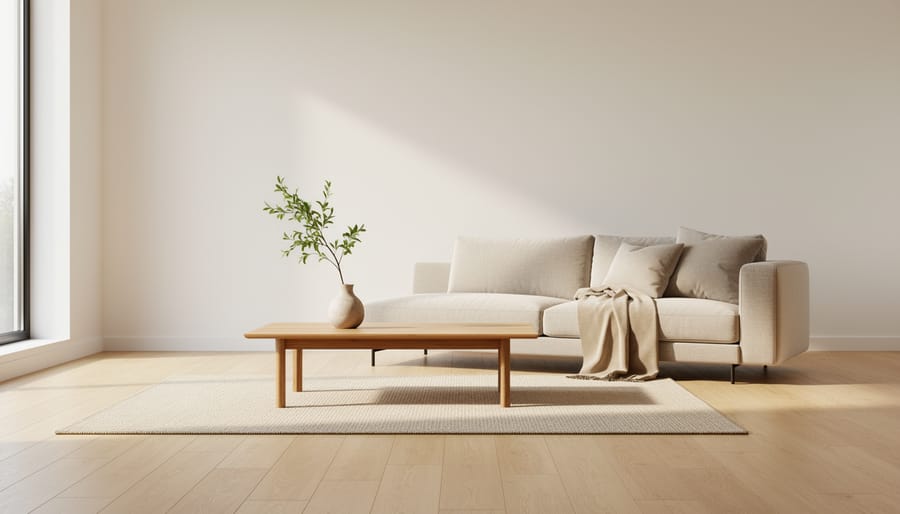
Minimalist living room staged with neutral sofa, linen accents, light wood furniture, and soft natural daylight
A calm, uncluttered living space demonstrates how minimalist staging uses negative space and warm neutrals to feel inviting.

Property professionals have discovered that minimalist staging delivers measurable advantages in today’s competitive market. When a listing features clean lines, uncluttered surfaces, and intentional space, buyers decide faster because they can immediately envision themselves in the home. The absence of personal artifacts and excessive furnishings removes cognitive barriers, allowing prospective buyers to project their own lifestyle onto the space rather than mentally editing out someone else’s.

Photography has become the primary selling tool for residential real estate, and minimalist staging translates exceptionally well through a camera lens. Rooms with fewer competing elements photograph brighter, appear larger, and maintain visual coherence across listing platforms. A well-edited space creates the picture-perfect presentation that attracts online engagement and drives showings, which matters when buyers scroll through dozens of properties before scheduling a single visit.

Minimalist staging also solves a practical problem: budget. Traditional staging often requires truckloads of furniture and accessories, storage logistics, and extended rental periods. A minimalist approach uses fewer, higher-quality pieces, reducing transportation costs and installation time. This efficiency makes professional staging accessible to a broader range of sellers and investment properties where margins matter.

The rise of remote collaboration has accelerated minimalist staging adoption. A virtual styling service can guide property professionals through minimalist transformations using video consultations, digital floor plans, and curated shopping lists. This model works particularly well for minimalist projects because the simplified aesthetic translates clearly through digital communication, there’s less room for misinterpretation when you’re working with ten carefully selected items rather than thirty.

Agents working across multiple markets have found that minimalist staging appeals to diverse buyer demographics. Young professionals appreciate the modern aesthetic, downsizers recognize the practicality, and international buyers find the neutral palette culturally adaptable. This broad appeal matters in markets where properties sit longer or attract varied buyer pools. The universality of clean, functional spaces transcends personal taste in ways that heavily styled properties cannot.

Essential Elements of Minimalist Home Styling

Color and Material Choices That Work

Start with warm neutrals as your foundation, think cream, greige, soft taupe, and pale sand rather than stark white throughout. These tones create serenity while maintaining warmth, particularly important for staging spaces where buyers need to envision themselves living comfortably. A true white ceiling paired with warmer wall tones often works better than monochrome schemes.

Natural materials prevent minimalist spaces from reading as cold showrooms. Oak, walnut, or ash flooring grounds a room with organic texture. Linen upholstery breathes better than synthetic fabrics and develops character over time. Stone countertops, marble, granite, or terrazzo, introduce subtle pattern without visual noise. Wool rugs in solid tones add tactile richness underfoot.

Layer textures rather than colors to build depth. Combine smooth plaster walls with raw timber shelving, matte ceramic vases with polished brass hardware, or woven rattan chairs with velvet cushions. The interplay between rough and refined surfaces creates interest that pure minimalism often lacks.

Introduce selective contrast through black or charcoal accents, window frames, light fixtures, or a single statement piece. This anchors the palette and prevents the washed-out effect that undermines staging impact. For properties targeting international buyers, consider how light quality varies by region; northern exposures may need slightly warmer palettes to compensate for cooler natural light.

Material quality matters more than quantity in minimalist design. One well-crafted solid wood dining table outperforms three mediocre pieces fighting for attention.

Furniture and Spatial Arrangement
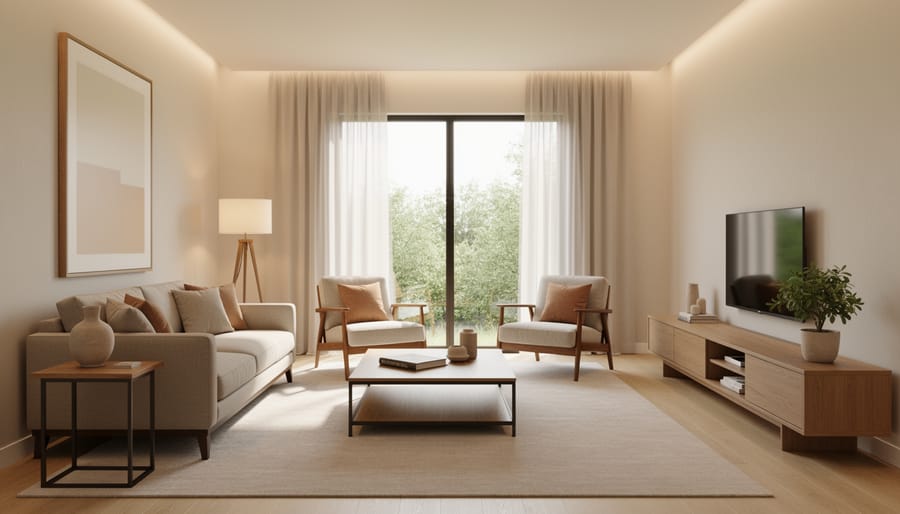
Minimalist dining space with simple table styling, linen textures, and warm side lighting
Strategic furniture scale and warm lighting help a property feel functional and photogenic without visual noise.

Successful minimalist furniture choices start with a single question: does this piece earn its place? In staging, every item competes for visual attention and physical space. A low-profile sofa with clean lines can anchor a living room while making the area appear larger than traditional overstuffed seating ever could. The same principle applies to dining tables, beds, and storage units, select furnishings that serve their function without dominating the room.

Scale matters more than quantity. One substantial piece often outperforms three smaller ones fighting for relevance. A statement dining table paired with simple chairs creates impact; cluttering the same space with a buffet, bar cart, and console dilutes the effect. When positioning furniture, pull pieces away from walls. Floating a sofa eighteen inches from the wall or centering a bed in a primary bedroom demonstrates usable space rather than hiding it.

Consider sightlines from entryways. The first view into any room should reveal flow, not obstacles. Arrange furniture to guide movement through the space naturally, creating pathways that feel deliberate rather than accidental. Avoid pushing everything to the perimeter, this staging instinct actually shrinks perceived space by creating a hollow center.

Storage furniture serves double duty in minimalist schemes. A sleek credenza conceals clutter while providing surface area for a single curated vignette. Open shelving works only when ruthlessly edited, display three objects, not thirty. The goal isn’t emptiness; it’s intentional composition where each element contributes to the room’s purpose and the property’s marketability.

Adapting Minimalism to Different Property Types

Minimalist home decor works differently depending on the property type, and understanding these distinctions helps you avoid a one-size-fits-all approach that falls flat.

Urban condos benefit most from vertical emphasis and transparent furniture. Limited square footage responds well to glass tables, wall-mounted shelving, and mirrors that expand perceived space without physical clutter. A single statement piece, a sculptural chair or oversized art, provides personality while maintaining breathing room. In these compact environments, every item must earn its place through beauty or function, ideally both.

Suburban homes offer more flexibility but present a different challenge: rooms can feel sparse rather than serene if you strip too aggressively. Here, minimalism succeeds through thoughtful zoning. Define purpose for each space with intentional furniture groupings rather than filling square footage. A living room might feature one substantial sofa and two accent chairs arranged around negative space, creating conversation areas that feel deliberate rather than empty. Layering textures, linen curtains, wool throws, ceramic vessels, adds warmth without visual noise.

Luxury estates require a calibrated approach where minimalism suggests refinement rather than restraint. High-end properties succeed when you everlasting decor styles with carefully edited modern pieces. Think museum-quality art on expansive walls, architectural lighting as sculpture, and statement furniture that commands attention through craftsmanship rather than quantity. The goal isn’t emptiness but restraint that lets exceptional materials and workmanship speak.

Investment properties present budget realities that make minimalism particularly practical. Clean lines and neutral palettes photograph well and appeal broadly, reducing time on market. Focus spending on quality flooring and lighting, two elements that elevate perceived value, while keeping furniture simple and scalable. A well-chosen neutral sofa costs less than constantly refreshing trendy pieces.

International applications demand cultural sensitivity. Some markets associate sparse interiors with incompletion rather than sophistication. In these contexts, mix old and new through carefully selected traditional elements within minimalist frameworks. A single antique cabinet or regional textile grounds the space in local context while maintaining overall simplicity.

Budget considerations apply everywhere: invest in fewer, better pieces rather than filling space with compromise furniture. One excellent dining table outlasts five mediocre ones.

The Minimalist Home Decor Conversation in 2026

The conversation around minimalist home decor in 2026 happens across multiple channels, from Instagram feeds showcasing serene interiors to professional forums where agents discuss staging ROI. Industry events play a crucial role in translating online inspiration into tangible design direction, offering spaces where homeowners can experience minimalist principles firsthand and professionals can evaluate how these approaches serve real property goals.

Event Detail Information
Event The Living Luxe Design Show
Dates April 17-19, 2026
Location Toronto Congress Centre, 1020 Martin Grove Rd, Etobicoke, ON
Scale 150,000 sq. ft.
Focus Residential styling innovations including minimalist design trends

The Living Luxe Design Show, presented by JennAir Canada, represents one venue where minimalist design sits alongside broader residential styling conversations. Events like this allow property professionals to see how minimalist staging techniques compare with other approaches, assess material quality in person, and connect with styling services that execute these visions. For homeowners considering minimalist transformation, such exhibitions offer perspective on whether this aesthetic aligns with their lifestyle needs or property goals. The dialogue extends beyond any single event, social platforms, design publications, and client consultations all contribute to how minimalism evolves from trend to practical implementation strategy.

Common Pitfalls When Implementing Minimalist Design
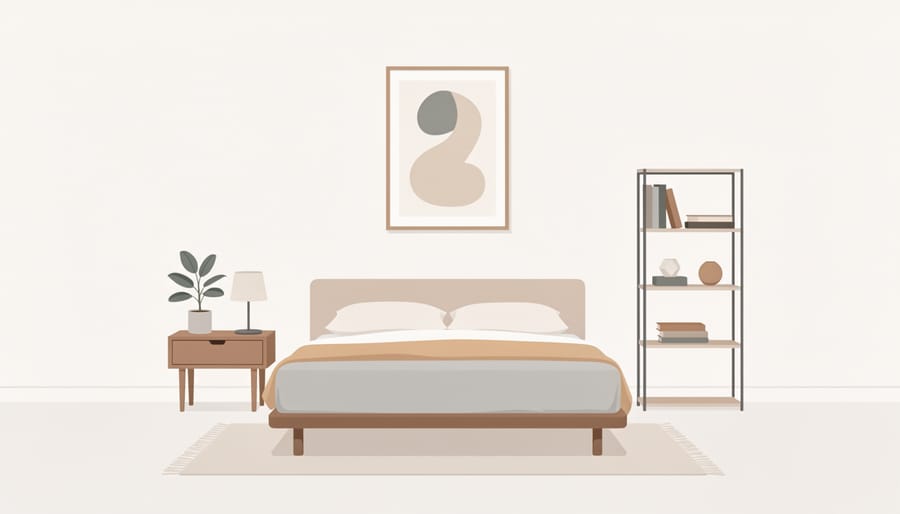
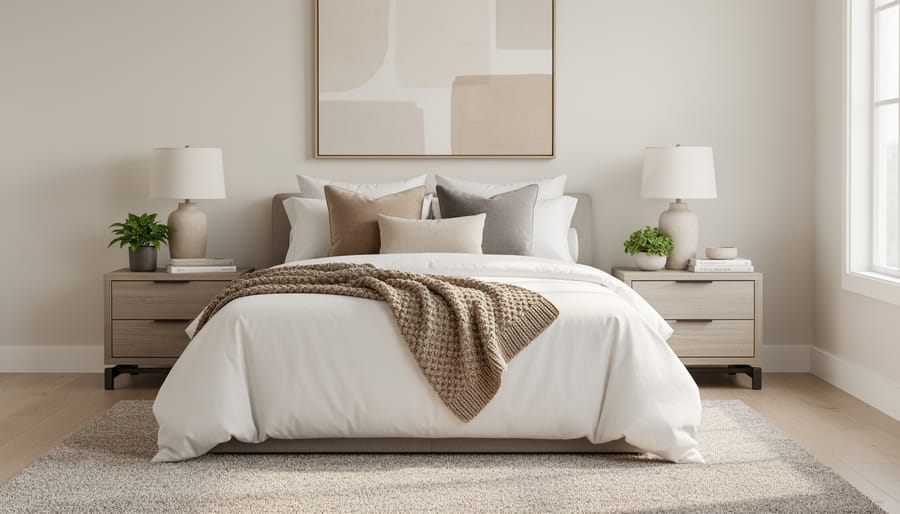
Serene minimalist bedroom with crisp white bedding, simple lamp, and calm neutral palette
This serene bedroom scene illustrates how minimalism prioritizes calm, livability, and purposeful editing rather than emptiness.

The most common misstep in minimalist design is confusing “empty” with “intentional.” Properties stripped of all character don’t feel serene, they feel unfinished, as though staging never happened. Real minimalism curates what remains, ensuring every piece serves a purpose and contributes to the spatial narrative. When a room lacks visual anchoring points or human warmth, potential buyers disengage rather than envision themselves living there.

Over-editing presents a different problem. Some staging teams remove so much that practical living becomes unclear. A kitchen with no accessories signals “showroom” rather than “home,” and bedrooms without bedside tables or lamps raise questions about functionality. Minimalism should clarify how spaces work, not obscure their utility. Include just enough to demonstrate purpose: a bowl of fruit, a reading lamp, a throw that signals comfort without clutter.

Personality often vanishes in pursuit of neutrality. While broad appeal matters for staging, spaces need warmth to feel inviting. This is where texture becomes crucial, linen curtains, a wool rug, wood grain visible on furniture. Incorporating aged and superior pieces can ground a minimalist palette without introducing visual chaos. A single well-chosen vintage accent or artisan object adds depth that mass-produced items cannot replicate.

The most damaging misconception equates minimalism with budget staging. Simply removing furniture to avoid rental costs creates sparse, unconsidered spaces. Effective minimalist design requires deliberate selection of higher-quality pieces that command attention through form and craftsmanship. Three substantial, well-placed items outperform six mediocre ones scattered throughout a room.

Professional stylists approach minimalism by addition through subtraction, determining what belongs before considering what to remove. They understand sight lines, scale relationships, and how negative space directs attention toward architectural features or key selling points. This expertise separates minimalism as strategic design from emptiness disguised as style.

Collaborating with Professionals for Minimalist Transformation

Achieving a genuinely effective minimalist transformation rarely happens by accident. Professional styling teams bring trained eyes for spatial proportion, material quality, and the subtle details that separate austere emptiness from serene elegance. When homeowners attempt minimalist decor without guidance, they often strip away too much or fail to curate what remains, leaving spaces that photograph poorly or feel unwelcoming in person.

Working with experienced stylists offers several practical advantages. Professionals can assess which existing furnishings deserve to stay and which undermine the aesthetic, saving money by identifying quality pieces worth highlighting rather than replacing everything. They understand lighting angles and camera sightlines for property photography, ensuring that minimalist staging translates effectively across digital marketing channels. For sellers and agents working across markets, a stylist’s international perspective helps calibrate the level of minimalism appropriate for local buyer expectations without sacrificing the clean aesthetic.

Virtual consultations have expanded access to expert curation, allowing property owners anywhere to receive detailed styling plans, mood boards, and actionable shopping guidance without geographic constraints. Many professionals now offer hybrid approaches: remote planning followed by on-site installation support, or periodic virtual check-ins during phased transformations. This flexibility suits both tight timelines and budget-conscious projects.

The value of collaboration becomes especially clear when balancing minimalism with functionality. A skilled stylist helps homeowners preserve practical storage, comfortable seating, and personal warmth while editing ruthlessly elsewhere. They know which rooms demand investment pieces and where affordable alternatives work perfectly well. For properties targeting sale or lease, professionals can stage spaces that feel aspirational yet attainable, striking the balance that converts viewers into buyers.

Minimalist home decor has evolved beyond aesthetic preference to become a calculated approach to property presentation. The homes that move fastest in today’s market aren’t necessarily the most heavily styled, they’re the ones where every element earns its place, creating environments that feel both spacious and intentional.

What separates effective minimalism from simply emptying a room is understanding how space, light, and carefully chosen pieces work together to guide a buyer’s eye and imagination. This distinction matters whether you’re preparing your own home for sale, advising clients on staging strategy, or developing properties with marketability in mind. The wrong approach leaves spaces feeling stark and unwelcoming. The right approach creates clarity that helps potential buyers envision themselves in the environment.

Professional styling brings this expertise to the equation, the ability to edit thoughtfully rather than drastically, to balance emptiness with warmth, and to adapt minimalist principles across different property types and cultural contexts. It’s a collaborative process that considers both immediate presentation goals and longer-term livability.

As you evaluate properties in your own portfolio or consider how to position your home in a competitive market, the question isn’t whether minimalist principles apply, it’s how to implement them with the precision that produces results.
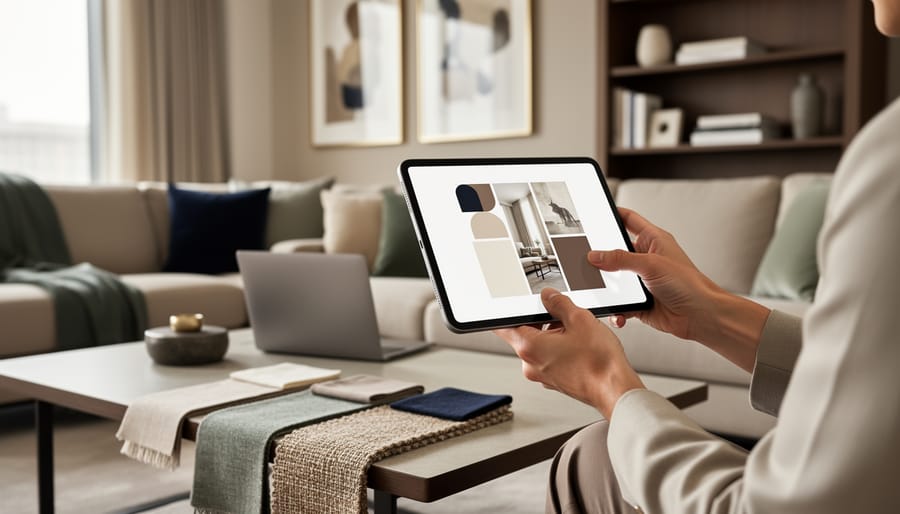
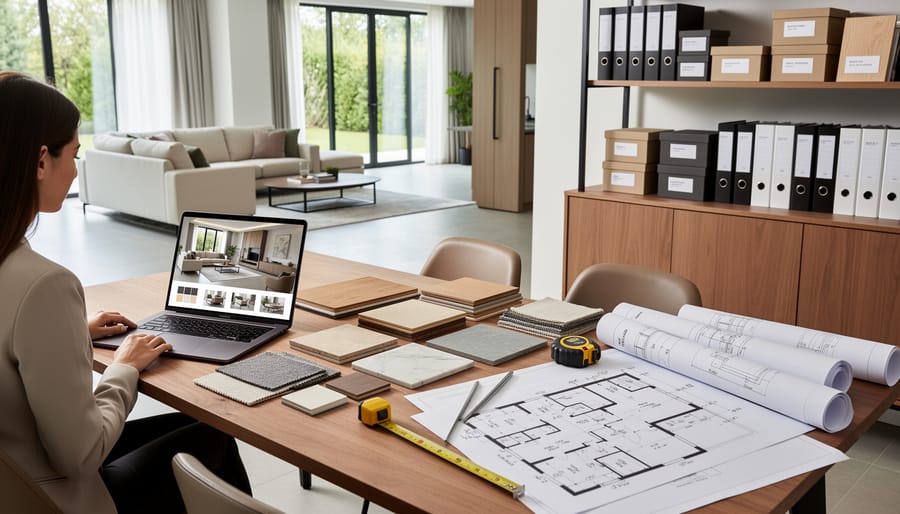
Designer’s hands using a tablet and laptop to style a modern living room with fabric swatches on a coffee table, shown in soft natural light.

How to Choose a Virtual Styling Service: A Buying Guide for 2026

Virtual styling services connect you with professional interior designers who transform your home remotely through online consultations, digital mood boards, and shoppable product lists, typically at 40-70% less cost than traditional in-person design. This collaborative approach delivers personalized design guidance without geographic limits, making expert styling accessible whether you’re refreshing a single room or staging a property for sale.

The remote design industry has matured significantly, now offering everything from one-time consultations to comprehensive renovation planning. Unlike the early iterations that relied on basic email exchanges, today’s virtual styling platforms combine video conferencing, 3D visualization tools, and augmented reality previews to create an experience that rivals traditional services in quality while offering far greater flexibility in timing and budget.

What distinguishes effective virtual styling from simple online advice is the structured process: detailed intake questionnaires capture your aesthetic preferences and functional needs, professional designers translate that information into cohesive design plans, and you receive implementation support that goes beyond a generic Pinterest board. The best providers assign you a dedicated stylist who understands your vision, considers your existing furnishings, and sources pieces within your specified budget range.

The challenge lies not in whether virtual styling works but in choosing the right service model for your specific project. Subscription platforms offer ongoing support ideal for gradual transformations, while project-based services suit time-sensitive needs like pre-sale staging. Hourly consultations provide targeted expertise for decision-making moments, and AI-assisted tools deliver instant inspiration at minimal cost but with less personalization.

This guide evaluates the key factors that separate exceptional virtual styling services from disappointing ones, compares the primary service models available in 2026, and provides clear recommendations matched to different project types and budgets. You’ll learn which red flags signal potential problems and how international service providers can bring fresh perspectives to your design challenges.

What Virtual Styling Services Include

Person working on a virtual styling consultation with a laptop, fabric swatches, and measuring tape at a dining table
A modern home setting shows how virtual styling planning happens alongside real materials and measurements.

Virtual styling services deliver professional interior design expertise through digital channels, removing the need for in-person meetings while maintaining the quality and personalisation of traditional design consultancy. When you engage a virtual stylist, you receive a structured set of deliverables tailored to transform your space remotely.

The process typically begins with an initial digital consultation, conducted via video call or detailed questionnaire. During this phase, you share photographs of your space, measurements, budget parameters, and your aesthetic preferences. The designer asks targeted questions about how you use the room, what frustrates you about the current layout, and what atmosphere you want to create. This foundational conversation establishes the project scope and ensures both parties align on expectations before design work begins.

From there, your virtual stylist develops the visual and practical elements that guide your transformation:

  • Custom mood boards showcasing colour palettes, textures, and the overall design direction
  • Scaled floor plans with furniture placement and traffic flow optimisation
  • 3D renderings or digital room visualisations illustrating the proposed design
  • Curated shopping lists with direct links to furniture, décor, and materials within your budget
  • Detailed styling guides explaining how to arrange accessories and layer textiles
  • Implementation timelines breaking the project into manageable phases

Many services include a revision round, allowing you to request adjustments to colours, furniture selections, or layouts before finalising the design. This collaborative refinement ensures the outcome reflects your vision while benefiting from professional expertise.

Throughout the project, communication happens through a mix of email, shared digital folders, video calls, and design software platforms. You might receive annotated images highlighting specific paint colours or fabric swatches shipped to your address for tactile review. Some virtual stylists offer implementation support after delivering the design, answering questions as you execute the plan and troubleshooting any challenges that arise during furniture assembly or accessory placement. The entire experience prioritises flexibility and accessibility, bringing professional design guidance to your project regardless of your location.

Essential Factors When Choosing a Virtual Styling Service

Bright modern living room styled with neutral furniture, textured textiles, and curated decor
A polished, remotely planned-looking living space illustrates the professional results clients can achieve virtually.

Designer Credentials and Portfolio Quality

Evaluating a designer’s credentials starts with examining their portfolio for breadth and quality. Look for a range of completed projects that demonstrate versatility across different styles, room types, and budgets rather than repetitive aesthetics. Strong portfolios showcase clear before/after transformations with professional photography, detailed explanations of design challenges, and evidence of problem-solving tailored to each client’s needs. Pay attention to whether the designer’s previous work aligns with your preferred aesthetic and project scale.

Client testimonials provide insight into the designer’s communication style, reliability, and ability to deliver on promises. Seek reviews that mention specifics like adherence to timelines, responsiveness during revisions, and satisfaction with final results. Verify professional credentials such as formal design education, industry certifications, or memberships in recognized organizations, which signal commitment to standards and ongoing learning. Understanding revision time limits and how designers handle changes also reveals their professionalism and flexibility. A designer who transparently shares their process, credentials, and real project outcomes demonstrates confidence and trustworthiness worth your investment.

Technology Platform and Communication Methods

The platform a virtual styling service uses directly affects how smoothly you’ll collaborate and how clearly you’ll understand the proposed design. Most reputable services conduct initial consultations via Zoom, Google Meet, or Microsoft Teams, allowing real-time discussion of your space, preferences, and budget. After that call, expect file sharing through platforms like Dropbox, Google Drive, or dedicated client portals where you’ll access mood boards, floor plans, and product links.

Professional services typically present designs using software such as SketchUp for 3D renderings, Canva or Adobe Creative Suite for mood boards, and specialized tools like Modsy or Planner 5D for room visualizations. The presentation format matters: static PDFs work for straightforward projects, but interactive presentations with clickable shopping links and multiple viewing angles prove more useful for complex renovations.

Test the communication channels before committing. Ask whether the designer responds via email, text, or a project management app like Asana. Clarify how many video sessions are included and whether screen-sharing during calls helps you visualize changes in real time. Services that combine multiple communication methods, video for personal connection, written summaries for clarity, and visual presentations for inspiration, tend to deliver the most satisfying client experience.

Service Flexibility and Customization

The best virtual styling services scale seamlessly to match your project scope and constraints. Whether you’re refreshing a dated living room or redesigning an entire property, look for providers that offer modular packages rather than rigid one-size-fits-all solutions.

A flexible service should let you choose specific rooms, adjust the level of detail in deliverables, and modify timelines to fit your schedule. Some clients need comprehensive 3D renderings and detailed shopping lists, while others benefit from streamlined mood boards and key furniture recommendations. The provider should assess your situation first and propose an appropriate scope rather than pushing a standard package.

Budget customization matters equally. Quality services accommodate varying price points by adjusting the number of design concepts, revision rounds, or implementation guidance included. They might offer an economy tier with essential guidance for DIY execution, mid-range options with curated product selections at multiple price points, or premium packages with high-end sourcing and detailed styling instructions.

Ask prospective designers how they adapt their process for different client needs and whether you can add or remove specific deliverables. This flexibility ensures you pay for exactly what benefits your project, not unnecessary extras that exceed your requirements or budget.

Pricing Structure and Budget Transparency

Virtual styling services typically use three pricing models: flat fees for specific deliverables (often $200-$800 for a single room), hourly rates ranging from $75-$250 depending on designer expertise, or tiered packages that bundle consultations with design boards and shopping lists. Package-based pricing offers the most transparency, you know upfront exactly what you’ll receive and what it costs.

However, the design fee represents only part of your total investment. Implementation costs, furniture, decor, labor, usually dwarf the styling fee itself. A $500 design consultation might recommend $5,000 in purchases for a living room refresh. Request that your designer work within your stated total budget, not just their service fee. Ask how they’ll prioritize recommendations if you can’t afford everything at once.

Reputable services provide clear breakdowns before you commit. They should specify deliverable formats, revision allowances, and timeline expectations. Be wary of rock-bottom pricing that seems disproportionate to the scope, quality designers invest significant time in research, sourcing, and customization. Budget transparency means understanding both what the service costs and what executing the design will require, ensuring the final vision aligns with your financial reality from the start.

Types of Virtual Styling Services Compared

Laptop showing a remote consultation video call while real interior materials and styling cues appear nearby
Remote collaboration is visually represented through a laptop video call paired with a real interior context.

Virtual styling services fall into four main models, each offering different levels of engagement, personalization, and investment. Understanding these distinctions helps you match a service type to your project scope, budget, and desired outcome.

DIY Design Platforms provide self-service tools with pre-made templates, furniture libraries, and basic layout software. You input your room dimensions, drag and drop items, and create designs independently. These platforms often include style quizzes and automated recommendations based on your answers. The trade-off is limited customization: you’re working within template constraints rather than receiving designs tailored to your specific space’s architectural features or personal aesthetic nuances. DIY platforms suit confident homeowners who enjoy hands-on design and want inspiration at minimal cost, though the results rarely achieve the polish of professionally crafted solutions.

Semi-Custom Consultations offer a middle ground with some designer input but limited back-and-forth. You typically submit photos and measurements, complete a questionnaire, and receive a single design concept with a mood board and shopping list. Revisions are either unavailable or capped at one round. Communication happens primarily through email or forms rather than live video calls. This model works for straightforward refresh projects where you need professional direction but can execute the vision independently without ongoing support. It’s particularly useful for single rooms with clear objectives, like updating a dated living room or styling a nursery.

Full-Service Personalized Design delivers comprehensive support with a dedicated designer managing your project from concept through implementation. You start with video consultations to discuss goals, preferences, and lifestyle needs. The designer then creates custom floor plans, detailed 3D renderings showing multiple angles, curated product selections with purchase links, and styling guidance. Multiple revision rounds allow refinement until the design perfectly aligns with your vision. Ongoing communication via phone, video, or messaging ensures questions get answered promptly. This option suits homeowners investing in major transformations, real estate professionals staging high-value properties, or anyone who values collaborative refinement and wants polished, publication-worthy results.

Hybrid Models blend virtual convenience with strategic in-person touchpoints. A designer might conduct the initial consultation remotely, then visit your property for measurements and spatial assessment before completing the design virtually. Alternatively, the design phase happens entirely online, followed by an optional in-person installation visit where the designer oversees furniture placement and final styling. These services bridge the gap for clients who want virtual pricing and scheduling flexibility but appreciate face-to-face interaction at critical project stages. They’re ideal when accuracy matters intensely (custom built-ins, complex layouts) or when you lack confidence implementing designs alone.

Service Type Personalization Level Typical Price Range Best For Key Limitations
DIY Design Platforms Low (template-based) $0, $200 Budget-conscious DIYers, simple refreshes Generic results, no expert guidance, limited customization
Semi-Custom Consultations Medium (one concept) $200, $800 Single rooms, straightforward projects Minimal revisions, limited communication, self-implementation required
Full-Service Personalized High (dedicated designer) $800, $5,000+ Whole-home transformations, luxury projects, staging Higher investment, longer timelines
Hybrid Models High (custom with in-person) $1,500, $7,000+ Complex layouts, installation support, high accuracy needs Geographic restrictions, scheduling complexity, premium pricing

Selecting the right model depends on your comfort with independent execution, budget constraints, and project complexity. A rental apartment refresh might thrive with semi-custom support, while a developer staging multiple properties benefits from full-service scalability. Assess not just the upfront design cost but the hidden expense of your own time: DIY tools demand hours of learning and trial-and-error that a paid service eliminates.

Who Benefits Most from Virtual Styling

Staged bedroom with coordinated bedding, layered lamps, and neutral decor creating an inviting interior
A thoughtfully staged bedroom highlights how virtual styling can elevate the look and feel of an entire space.

Virtual styling services deliver exceptional value for a diverse range of clients, though certain profiles benefit particularly from the remote consultation model. Understanding whether your situation aligns with these ideal use cases helps determine if virtual styling represents the best investment for your project.

Homeowners consistently find virtual services appealing because they offer professional design expertise at a fraction of traditional interior design costs. If you’re renovating a single room, refreshing your living space, or simply struggling with furniture arrangement and colour choices, virtual styling provides expert guidance without the commitment of a full-service contract. The flexibility to implement recommendations at your own pace, combined with detailed shopping lists and visual mockups, empowers homeowners to achieve professional results while maintaining control over their budget and timeline. This model works especially well for those comfortable with DIY implementation or willing to coordinate contractors independently.

Real estate agents staging properties for sale represent another prime audience. Virtual styling allows agents to present compelling, market-ready interiors across multiple listings without the recurring expense of physical furniture rental. Whether staging vacant properties through digital renderings for marketing materials or advising sellers on strategic improvements before listing, agents benefit from scalable solutions that enhance property appeal. The quick turnaround times typical of virtual services align perfectly with the fast-paced real estate market, where visual presentation directly influences buyer interest and final sale prices.

Property developers managing multiple units or projects simultaneously gain significant efficiency through virtual styling. The ability to create cohesive design schemes that can be replicated across apartments, model homes, or commercial spaces reduces both time and cost. Developers working on large-scale residential projects appreciate virtual services that establish consistent aesthetic direction while allowing flexibility for individual unit customization.

Virtual styling proves invaluable for specific scenarios including:

  • Relocated professionals furnishing new homes in unfamiliar cities without local design connections
  • Military families managing frequent moves who need efficient setup guidance for each new space
  • International clients purchasing investment properties abroad who cannot be physically present
  • Remote workers redesigning home offices for improved functionality and video call backgrounds
  • Empty nesters downsizing who need help reimagining furniture and layouts for smaller spaces
  • First-time homebuyers lacking confidence in decorating decisions who want professional direction

International clients particularly benefit from virtual styling’s borderless nature, accessing design talent worldwide regardless of physical location. A homeowner in Sydney can work with a Paris-based designer specializing in French modern aesthetics, while a developer in Dubai might collaborate with a Scandinavian designer known for minimalist commercial spaces. This global reach expands creative possibilities and connects clients with specialists whose portfolios perfectly match their vision, transcending geographical limitations that once constrained design choices.

Recommended Virtual Styling Services for Different Needs

Matching a virtual styling service to your specific project ensures you get the design support and value you need without paying for features that don’t apply to your situation.

For luxury home styling, look for full-service providers with established portfolios of high-end projects. These services typically assign a dedicated senior designer, offer multiple revision rounds, and provide detailed specifications for custom furnishings and finishes. Expect comprehensive deliverables including 3D renderings, curated shopping lists with trade sources, and ongoing support through the implementation phase. While pricing starts higher, often £2,000 to £5,000 for a single room, the investment reflects personalized attention and access to designer-only resources. Clients pursuing sophisticated aesthetics benefit from providers who demonstrate expertise in layering textures, sourcing unique pieces, and creating cohesive schemes that feel both curated and liveable.

Note: Internationally renowned providers like Loand Styles excel in maintaining quality standards across borders, offering expert designers and dedicated project managers who collaborate seamlessly with clients anywhere in the world.

Budget-conscious makeovers work best with semi-custom services or well-regarded DIY platforms that offer professional guidance at accessible price points. Services in the £200 to £800 range typically provide mood boards, furniture layouts, and shopping lists focused on high-street and mid-range retailers. You’ll receive fewer revisions and less one-on-one interaction, but the core design direction remains solid for straightforward room refreshes. Choose platforms that let you specify your budget upfront and receive recommendations tailored to that constraint rather than requiring edits later.

Real estate staging demands services experienced in market psychology and buyer appeal. Seek providers who understand how to depersonalize spaces, maximize perceived room size, and highlight architectural features through strategic furniture placement. Staging-focused services often offer rapid turnaround (one to two weeks) and prioritize rental furniture sourcing or DIY implementation guides that agents can execute quickly. Pricing typically scales by property size, ranging from £500 for a small flat to £2,000 for a detached home.

Moving and relocation support requires services comfortable working with floor plans and measurements alone, since you can’t provide photos of your new space. Look for designers who ask detailed questions about lifestyle, existing furniture, and functional needs, then deliver layouts showing exactly where pieces fit and what additional items you’ll need. This approach works particularly well for international relocations, where clients can purchase locally upon arrival using the designer’s guidance.

Commercial properties, boutique hotels, serviced apartments, co-working spaces, benefit from services that scale design concepts across multiple identical units while maintaining brand consistency. Choose providers with commercial portfolio experience who can specify durable, high-traffic materials and work within per-unit budgets. Many virtual services offer package pricing that reduces per-room costs when styling five or more similar spaces simultaneously.

Common Mistakes to Avoid When Hiring Virtually

Selecting a virtual styling service without proper vetting can lead to wasted money, miscommunication, and disappointing results. Understanding where clients commonly go wrong helps you make informed decisions and secure the professional transformation your space deserves.

The most frequent mistake homeowners make is choosing a service based exclusively on the lowest price. While budget matters, ultra-cheap options often deliver generic templates rather than personalized design. A rock-bottom price typically signals limited designer experience, minimal customization, or inadequate revision opportunities. Instead of fixating on cost alone, evaluate what you receive for your investment: dedicated designer time, custom mood boards, comprehensive shopping lists, and implementation guidance create far more value than cookie-cutter templates.

Failing to communicate clearly about your style preferences, lifestyle needs, and actual budget creates another common pitfall. Vague direction like “make it modern” leaves designers guessing, while hiding your true budget leads to recommendations you cannot afford to implement. Be specific about colours you love and hate, furniture you plan to keep, and realistic spending limits for purchases beyond the design fee itself.

Many clients also stumble by expecting virtual services to replicate in-person experiences. Virtual styling cannot include physical fabric swatches delivered to your door, hands-on furniture arrangement, or site visits to assess lighting at different times of day. Adjust your expectations to match the remote format: you will receive digital renderings, online shopping links, and video consultations rather than tactile samples and face-to-face meetings.

Additional mistakes that undermine results include:

  • Skipping portfolio reviews and failing to verify designer credentials or specialized experience in your project type
  • Neglecting to clarify exactly what deliverables you will receive, from the number of room concepts to the format of floor plans
  • Not asking upfront about revision policies, only to discover changes cost extra or are limited to one round
  • Providing inaccurate room measurements or poor-quality photos that prevent designers from creating workable solutions
  • Choosing a service with limited communication channels when you prefer real-time collaboration and frequent updates

Protect your investment by researching thoroughly before committing. Request sample deliverables, read recent client reviews, and confirm revision terms in writing. A reputable virtual styling service welcomes questions about their process, shares clear examples of past work, and establishes transparent expectations from the initial consultation. Taking time to vet providers and communicate openly positions you for a successful collaboration that truly transforms your space.

Frequently Asked Questions About Virtual Styling Services

Virtual styling raises practical questions for first-time clients weighing this approach against traditional in-person design. Understanding the logistics, technology requirements, and implementation realities helps you set accurate expectations and prepare for a smooth collaboration.

How does virtual styling differ from traditional interior design?

Virtual styling delivers design plans, mood boards, and shopping lists through digital platforms rather than in-person consultations and site visits. You communicate via video calls, email, and design software, receiving visual renderings and detailed instructions you implement yourself or with local contractors, whereas traditional design typically includes hands-on installation oversight.

What technology do I need as a client?

Most services require only a smartphone or computer with internet access, a camera for taking room photos, and basic measuring tools like a tape measure. Video call capability through platforms like Zoom or Google Meet is standard, and designers typically share files through email or cloud storage that requires no specialized software on your end.

How long does a typical virtual styling project take?

Timelines vary by project scope, but single-room designs usually take two to three weeks from initial consultation to final deliverables. Whole-home projects may extend to six to eight weeks, with revision rounds adding one to two weeks depending on the service’s policy.

How do designers collect accurate measurements and room details remotely?

You measure rooms using a tape measure and provide dimensions through a questionnaire or intake form, supplemented by photos taken from multiple angles. Many designers send detailed photo guides showing exactly what to capture, including ceiling height, window placement, door swings, and architectural features, ensuring they have the information needed for accurate floor plans.

Can virtual styling work for rental properties where I can’t make permanent changes?

Yes, virtual styling adapts well to rentals by focusing on furniture arrangement, removable decor, temporary window treatments, and accessories that transform spaces without alterations. Designers experienced with rentals prioritize portable solutions and renter-friendly updates that enhance aesthetics within lease restrictions.

Do I need to implement the design myself, or can I get professional help?

Implementation is typically your responsibility with virtual styling, though some services offer optional support connecting you with local contractors, furniture assembly services, or installation professionals. Full-service packages may include implementation coordination for an additional fee, while basic packages provide detailed instructions assuming self-execution or independently sourced help.

The measurement process deserves particular attention because accurate dimensions form the foundation of functional designs. Designers generally request room length, width, and ceiling height, plus distances from walls to windows, doors, electrical outlets, and fixed features like radiators or built-ins. Taking photos with a measuring tape visible in frame helps designers verify dimensions and spot potential issues before finalizing furniture placement. Clear documentation prevents costly mistakes like ordering sofas that won’t fit through doorways or positioning beds that block closet access.

Implementation support varies significantly across service levels. Budget platforms provide shopping links and basic placement diagrams, leaving execution entirely to you. Mid-tier services may offer video walkthroughs explaining installation sequences and answering follow-up questions during implementation. Premium packages sometimes include virtual check-ins as you execute the design, allowing real-time troubleshooting when actual products or room conditions differ slightly from plans. Clarifying what post-delivery support you’ll receive prevents frustration when questions arise during the transformation process.

Choosing the right virtual styling service comes down to understanding what you need and matching those requirements with providers who demonstrate expertise, clear communication, and a proven track record. The accessibility of professional design guidance, regardless of where you live or your budget constraints, represents a fundamental shift in how homeowners, agents, and developers approach interior transformation.

The most successful virtual styling partnerships happen when clients invest time upfront in articulating their goals, evaluating designer portfolios, and asking detailed questions about process, deliverables, and support. Don’t rush this decision based solely on price or convenience. The difference between a mediocre outcome and a space that genuinely reflects your vision often lies in selecting a service with the right combination of design talent, technological capability, and collaborative approach.

Virtual styling breaks down geographical barriers that once limited access to top-tier design talent. A homeowner in regional Australia can work with a London-based designer specializing in coastal interiors. A property developer in Toronto can collaborate with a staging expert familiar with international buyer preferences. This global reach means you’re no longer restricted to local options that may not align with your aesthetic or functional needs.

The collaborative nature of quality virtual services ensures you remain involved throughout the process while benefiting from professional expertise. You contribute the intimate knowledge of how you live in your space; the designer brings technical skill, industry connections, and an objective eye for what works.

Virtual styling services deliver real transformation when chosen thoughtfully. Evaluate your options carefully, communicate openly with potential designers, and select a provider whose approach, style, and service model genuinely match your project requirements. The right partnership will prove that distance is no barrier to creating spaces that inspire.

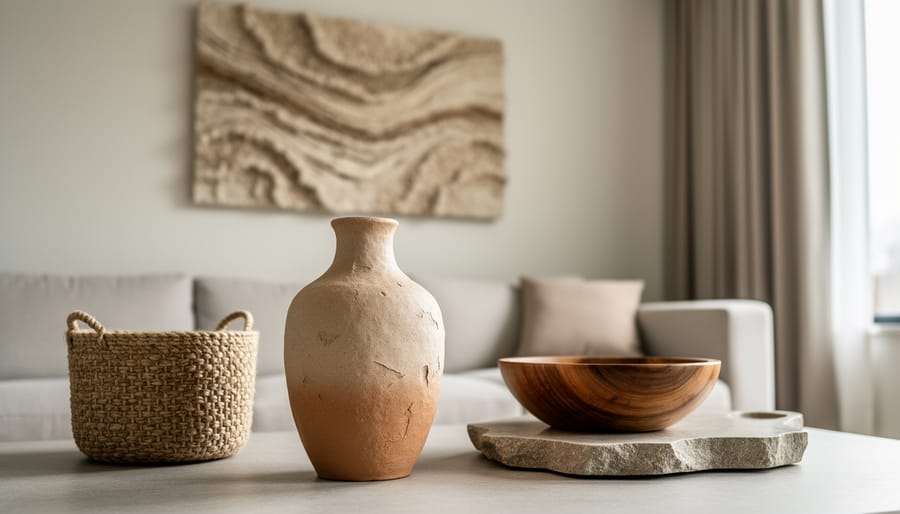
Contemporary living room vignette featuring a hand-thrown ceramic vase, textured natural-fiber wall sculpture, woven basket, wooden bowl, and stone tray in warm neutral tones.

Contemporary Home Decor Accessories That Transform Spaces in 2026

Contemporary home accessories in 2026 center on sculptural forms, organic materials, and nuanced neutral palettes that create visual interest without overwhelming a space. The shift from minimalism toward what designers now call “refined warmth” means accessories serve as intentional focal points rather than mere afterthoughts.

Start by anchoring each room with one statement piece. A hand-thrown ceramic vase in an irregular shape, a textured wall sculpture in natural fibers, or an architectural lighting fixture immediately establishes contemporary credibility. These investment pieces typically range from $150 to $800 and set the tone for everything else in the room.

Layer in functional accessories that display craftsmanship. Think handwoven baskets in varying heights, wooden bowls with visible grain patterns, or stone trays with organic edges. The contemporary aesthetic values pieces that tell a story of their making, where you can see the artist’s hand in slight variations and imperfections.

Balance hard and soft textures within each vignette. Pair smooth glass objects with rough linen, sleek metal frames with woven elements, polished surfaces with matte finishes. This textural conversation creates depth that photographs beautifully for listings and feels sophisticated in person.

Contemporary accessories work across budgets when you understand the principles. A $40 artisan candle holder and a $400 gallery sculpture both succeed if they share the same material honesty and sculptural quality. The key lies in editing ruthlessly. Three carefully chosen accessories create more impact than ten generic ones competing for attention.

The Evolution of Contemporary Accessories in 2026

Contemporary accessories have undergone a fundamental shift over the past few years, moving from afterthoughts that fill empty shelves to intentional design tools that define a space’s character. This transformation reflects a broader maturation of the contemporary aesthetic itself: rather than relying solely on architectural elements and furniture to create atmosphere, designers now view accessories as strategic layers that communicate sophistication, establish visual rhythm, and complete the narrative of a room.

Note: In 2026, accessories function as design anchors rather than decorative fillers, they’re selected first for their spatial impact, then for their aesthetic contribution.

The major design events of early 2026 confirmed this evolution with remarkable consistency. At Maison & Objet in Paris (January 15-19, 2026), exhibitors showcased accessories conceived as sculptural statements and textural counterpoints rather than mere embellishments. The Maison & Objet 2026 trends emphasized materiality, craft, and presence, qualities that position accessories as essential components of contemporary interiors. Just days later, IMM Cologne (January 20-23, 2026) reinforced these directions, with German and European manufacturers demonstrating how accessories bridge minimalist architecture and human warmth through carefully calibrated scale and finish.

This international perspective matters because contemporary design draws from global influences, and the accessory market reflects that cross-pollination. What we’re seeing in 2026 isn’t a single trend but a convergence: sustainable materials from Scandinavian makers, artisanal ceramics influenced by Japanese minimalism, textural weavings rooted in Mediterranean craft traditions. These pieces work together because they share underlying principles, restraint, quality, and intentionality, rather than matching aesthetics.

The upcoming High Point Market in North Carolina (October 17-21, 2026) will likely reinforce how North American designers adapt these international directions for local markets, demonstrating that contemporary accessorizing transcends geography while respecting regional preferences. The strategic approach has become universal: accessories now shape spatial perception, guide the eye, and establish emotional tone with the same deliberation once reserved for major furniture selections.

Essential Contemporary Accessory Categories for Every Space

Contemporary living room vignette with neutral sofa pillows, an abstract ceramic sculpture, and a matte ceramic floor vase
A styled contemporary living-room vignette demonstrates how textiles and sculptural accents work together to create a cohesive, modern look.

Textiles and Soft Furnishings

Contemporary textiles layer depth and warmth into minimalist frameworks through deliberate choices in texture rather than busy patterns. A linen throw in warm taupe draped over a charcoal sofa introduces tactile interest without visual noise, while velvet pillows in muted sage or terracotta provide strategic color accents that can shift seasonally. Handwoven wool rugs anchor seating areas with organic texture, their subtle variations in tone creating movement underfoot. Window treatments favor natural fabrics, sheer linen panels that filter light or heavyweight cotton drapes in neutral tones, avoiding fussy hardware in favor of sleek rods or recessed tracks that complement TV placement and architectural lines.

Budget-conscious approaches focus investment on foundational pieces like quality rugs that withstand traffic, while rotating lower-cost pillows and throws to refresh a space affordably. Mid-range textiles from established home retailers balance durability with contemporary aesthetics, whereas luxury natural fibers, Belgian linen, cashmere blends, hand-knotted silk, elevate spaces intended for long-term living or high-end staging. The key lies in mixing textures rather than relying on a single finish, creating layered sophistication that feels curated rather than matched.

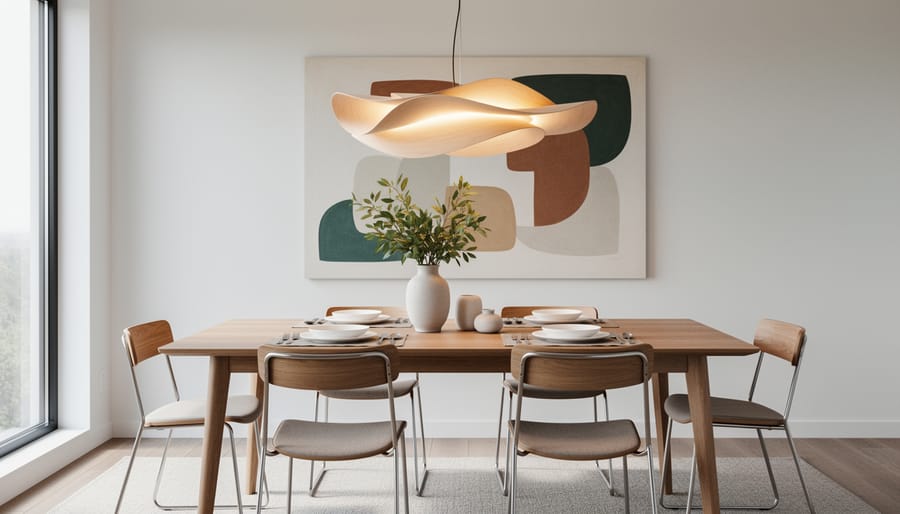
Contemporary dining room with a sculptural glass pendant light, ceramic table settings, and minimalist wall art
Lighting and art elevate an everyday dining space, showing how contemporary accessories add both function and visual interest.

Sculptural and Artistic Elements

Contemporary spaces come alive when sculptural and artistic elements introduce personality without overwhelming the clean-lined foundation. Abstract sculptures in organic forms, smooth ceramics, wire compositions, geometric metal pieces, serve as focal points that draw the eye while maintaining the restrained elegance central to contemporary design. The key lies in selecting statement pieces with intention: a single substantial sculpture on a console table commands more impact than three small objects competing for attention.

Scale matters profoundly in contemporary accessorizing. Oversized art objects work beautifully in open-plan living areas where ceiling height and square footage can accommodate drama, while smaller sculptures suit intimate vignettes on shelving or side tables. Placement should respect negative space, the breathing room that prevents contemporary interiors from feeling cluttered. Position sculptural pieces where sightlines naturally land, entryway tables, fireplace mantels, or floating shelves flanking windows.

Contemporary styling encourages confidence in artistic choices. You can mix old and new by pairing a vintage bronze sculpture with sleek acrylic accents, creating layers of interest that feel curated rather than matched. The balance between boldness and restraint defines success: choose one or two statement artistic pieces per room, then support them with simpler accessories that complement rather than compete. This disciplined approach creates spaces that feel intentional, sophisticated, and genuinely contemporary.

Organic and Natural Accents

Organic materials and living elements ground contemporary spaces in nature without compromising clean aesthetics. Natural stone vessels, wooden bowls in sculptural forms, and handwoven baskets serve as textural counterpoints to sleek surfaces. Live plants, particularly sculptural specimens like fiddle-leaf figs, bird of paradise, or architectural succulents, introduce organic movement and purify air while maintaining the refined lines contemporary design demands. The key is restraint: select a few statement plantings rather than cluttering surfaces with greenery.

Material choices matter. Terracotta planters in matte finishes, ceramic vessels with organic glazes, and woven fiber accents deliver warmth without competing with a room’s focal points. Dried botanical arrangements, particularly pampas grass and preserved branches, offer low-maintenance alternatives that maintain visual interest year-round.

For real estate staging, opt for high-quality artificial plants and permanent organic materials like polished stone objects or woven pieces that require no upkeep between showings. Reserve living plants for occupied homes where owners can maintain them, or use them strategically during open houses and photography sessions before removing them. Property developers should install self-watering planters or hardy, drought-tolerant species in common areas, balancing biophilic benefits with practical maintenance realities across turnover cycles.

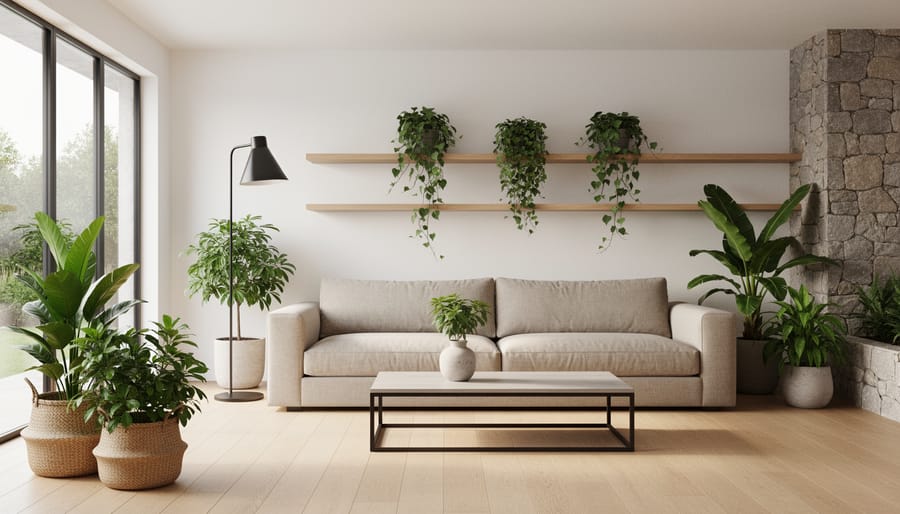
Corner of a contemporary room styled with a tall indoor plant and natural-texture decor on a console shelf
Natural materials and plants bring a contemporary, biophilic softness, making spaces feel alive without sacrificing modern simplicity.

Color, Texture, and Material Trends Shaping 2026

The palette of contemporary accessories in 2026 reflects a sophisticated evolution toward tactile richness and environmental consciousness. Insights from Maison & Objet (January 15-19, 2026) and IMM Cologne (January 20-23, 2026) reveal a design landscape where material authenticity trumps surface perfection, and where the interplay of texture creates visual interest within restrained color schemes.

Sustainable materials have moved from niche consideration to foundational choice. Reclaimed wood accessories, recycled glass vessels, and naturally dyed textiles appear throughout contemporary spaces, offering both ethical credibility and genuine character. These materials carry inherent irregularities, grain variations, subtle color shifts, organic imperfections, that prevent spaces from feeling sterile or overly curated. The contemporary aesthetic now embraces these authentic markers rather than concealing them.

Mixed metals continue their dominance, but 2026 brings nuance to the approach. Rather than the bold brass-meets-chrome contrasts of previous years, current applications layer warmer tones, brushed brass with antique bronze, champagne gold with weathered copper, creating depth without jarring transitions. This subtlety allows metal accents to anchor contemporary spaces without dominating them, particularly effective in accessories like candleholders, picture frames, and decorative bowls.

Natural stone has emerged as the textural hero of contemporary accessorizing. Marble, travertine, onyx, and limestone appear in accessories ranging from bookends to serving pieces, their veining and mineral deposits providing organic artistry. Designers favor unfilled travertine and honed finishes over polished surfaces, embracing the material’s natural porosity and texture. These stone pieces pair beautifully with aged superior pieces creating layered narratives within curated vignettes.

Material Aesthetic Qualities Ideal Applications Budget Range
Natural Stone Organic veining, tactile weight, mineral depth Sculptural objects, trays, bookends Moderate to high
Artisanal Ceramics Handcrafted texture, glaze variations, matte finishes Vases, bowls, decorative vessels Moderate
Mixed Metals Warm tonal layering, refined industrial edge Candleholders, frames, hardware Low to moderate
Reclaimed Wood Authentic patina, grain character, sustainability story Accent furniture, wall art, serving pieces Low to high

Artisanal ceramics represent perhaps the most significant shift in contemporary accessorizing. The hand-thrown vessel with visible throwing lines, the platter with uneven glaze pooling, the sculptural piece with intentional asymmetry, these imperfect objects inject humanity into minimalist frameworks. Neutral-toned ceramics in warm whites, soft grays, and earthy taupes dominate, their subtle variations creating visual interest without chromatic disruption.

The neutral palette itself has deepened and warmed. While stark white and cool gray remain foundational, 2026 accessories increasingly incorporate greige (gray-beige hybrids), warm putty tones, soft caramels, and muted terracotta. These warmer neutrals prevent contemporary spaces from reading as cold or institutional, particularly when layered across multiple accessory types. Strategic color appears through single statement pieces, a deep forest green vase, a burnt orange throw, rather than coordinated sets.

This material and color evolution creates contemporary elegance that transcends passing trends. By grounding accessory choices in natural materials with inherent longevity and timeless neutral palettes punctuated by considered color, these selections maintain relevance across shifting design cycles.

Accessorizing for Different Purposes: Selling, Living, and Investing

Property Staging: Accessories That Sell

When staging properties to sell faster accessories function as emotional triggers that help potential buyers envision themselves in the space. The key is selecting pieces that create warmth and sophistication without projecting a specific homeowner’s personality. Start with textiles: a cashmere-look throw in soft gray or warm beige draped over a sofa adds instant luxury for under $60, while oversized neutral pillows in varied textures (linen, cotton velvet, chunky weave) create visual interest at minimal cost.

Tip: Investing just 1-2% of a property’s listing price in strategic accessories can increase perceived value by 5-10% and reduce time on market by an average of three weeks.

Coffee table styling demonstrates professional attention to detail. A simple vignette, a sculptural bowl in matte ceramic, two hardcover design books with neutral covers, and a small arrangement of dried grasses, costs roughly $100 but signals contemporary taste. In bedrooms, quality white bedding with a single textured throw and two matching statement lamps creates hotel-like serenity. Avoid personal photographs, bold colors, or culturally specific art; instead, choose abstract prints in muted tones or simple botanical line drawings that complement any buyer’s vision while maintaining contemporary elegance.

Staged contemporary bedroom with neutral bedding, bedside lamp, and framed abstract artwork
This staging-style bedroom shows how neutral, high-impact accessories help create immediate comfort while staying broadly appealing.

Personal Styling: Reflecting Individual Identity

While staging demands broad appeal, personal styling invites homeowners to infuse contemporary spaces with meaningful artifacts that tell their story. The clean-lined contemporary framework becomes a canvas rather than a constraint, where carefully chosen accessories reveal personality without creating visual chaos.

Professional stylists approach personal accessory selection as collaborative discovery, exploring clients’ travel memories, artistic passions, and daily rituals to identify pieces that resonate authentically. A ceramicist’s collection might anchor a contemporary living room, or heirloom textiles could introduce warmth to minimalist bedrooms. The contemporary aesthetic accommodates these personal treasures when they share tonal harmony or sculptural quality with the overall design language.

Personal shopping services extend beyond simply selecting accessories to understanding how pieces will function in daily life. Does the homeowner entertain frequently, requiring conversation-starting objects? Do they seek calming environments that prioritize negative space? This individualized approach ensures accessories enhance lived experience rather than merely filling shelves, transforming contemporary spaces into deeply personal sanctuaries that still maintain the aesthetic’s signature sophistication.

Investment Properties: Durability Meets Design

Investment properties present a unique accessorizing challenge: pieces must project contemporary appeal while surviving multiple tenants and frequent cleanings. Property developers and managers benefit from selecting accessories that prioritize durability without sacrificing style, think tempered glass vases over delicate ceramic, performance fabrics in neutral tones, and metal sculptural pieces that withstand handling. This approach mirrors the principles of everlasting decor where timelessness and resilience converge. Focus investment on a few substantial pieces, a quality area rug in a forgiving pattern, substantial lamps with replaceable components, framed prints behind protective glass, rather than numerous fragile items. Budget-conscious strategies include purchasing multiples of identical accessories for quick replacement and selecting finishes that hide wear, such as matte blacks and brushed metals rather than polished surfaces that show fingerprints.

The Art of Curation: How Professionals Select and Place Accessories

Styling spaces with contemporary accessories isn’t about filling every surface. It’s about deliberate choices that guide the eye and create moments of visual interest throughout a room. At Loand Styles, our collaborative process, whether working hands-on or virtually across continents, follows principles refined through hundreds of styling projects for homeowners, agents, and developers.

Start with the rule of three, a foundational concept where objects grouped in odd numbers create more engaging compositions than pairs or even-numbered groupings. Three varying-height candlesticks on a dining table, a trio of ceramic vessels on open shelving, or three framed prints arranged vertically on a wall all feel naturally balanced without appearing too studied. This principle extends beyond literal groupings, think of three distinct textures within one vignette or three subtle color echoes across a room.

Visual weight matters as much as physical size. A single black sculptural piece carries more visual weight than three pale linen pillows, even if the pillows occupy more space. Professionals distribute this weight intentionally: balance a bold floor lamp on one side of a seating area with a gallery wall opposite, or counter a heavy console table with a substantial mirror above it. Ignoring visual weight creates spaces that feel lopsided, no matter how carefully you’ve measured.

Negative space, the breathing room between and around objects, defines contemporary styling more than the accessories themselves. When clients struggle with accessorizing, they’ve typically overcrowded surfaces. We remove half the items, and suddenly everything becomes visible. That sculptural bowl needs empty space around it to register as art rather than clutter.

The curation process professionals use follows a systematic approach:

  1. Assess sightlines from entry points and primary seating positions, noting what the eye encounters first in each space
  2. Establish focal points in each room, fireplace mantels, console tables, coffee tables, as anchoring locations for key accessories
  3. Select hero pieces first (statement sculptures, significant art, distinctive lighting) that set the room’s accessory tone
  4. Layer supporting elements that vary in height, texture, and scale around each hero piece without competing with it
  5. Step back after each addition to view the composition from multiple angles, removing anything that disrupts balance
  6. Photograph the space to identify what works and what reads as visual noise through the camera lens

This systematic approach proves especially valuable in virtual styling consultations, where Loand Styles collaborates with international clients through detailed room assessments, curated shopping lists, and placement guidance delivered remotely. The same principles that create impact in person translate through screens when applied methodically.

Creating vignettes, small, composed moments on side tables, shelves, or credenzas, requires layering with intention. Combine varying heights (a tall vase with low stack of books), mix materials (smooth glass with rough ceramic), and include one organic element (fresh stems or sculptural branch). Each vignette should feel complete yet effortless, as if these objects naturally gravitated together rather than being arranged.

Professional accessorizing recognizes that less execution time doesn’t mean less expertise. The ability to edit ruthlessly, knowing which three accessories will outperform ten mediocre ones, comes from understanding how visual principles interact with a room’s architecture, light quality, and purpose.

Budget-Conscious Contemporary Accessorizing

Contemporary styling doesn’t require luxury budgets. Strategic spending delivers high-impact results across any price point, from property staging projects with tight margins to personal styling where homeowners want to refresh gradually. The key lies in understanding where investment yields the greatest visual return and where economizing maintains quality without compromising the clean-lined aesthetic that defines contemporary design.

Invest in pieces that anchor a room and endure changing trends. Quality textiles, a handwoven wool rug, Belgian linen window treatments, or textured throws in natural fibers, form the tactile foundation that cheaper alternatives can’t replicate. These pieces wear better, photograph well for property listings, and justify their cost through longevity. Similarly, statement lighting and one significant sculptural object per room create focal points worth the expense. A well-designed ceramic vessel or abstract metal sculpture commands attention in ways that multiple smaller items never will.

Economize on accessories that layer around these investments. Affordable contemporary options abound in throw pillows, smaller ceramic pieces, and botanical accents. Mix a luxury cashmere throw with budget linen pillows in similar tones. Pair an investment art piece with inexpensive glass votives and natural wood trays. High-street retailers now offer clean-lined accessories that read contemporary when curated thoughtfully, especially in neutral palettes where material quality matters less than form and proportion.

The professional approach treats accessorizing as editing. Three carefully chosen pieces at varied price points outperform ten mediocre items at the same total cost. For staging, this means investing in versatile neutrals that work across multiple properties while rotating in fresh, budget-friendly accents for each listing. For personal projects, it means building slowly with intentional purchases rather than filling space quickly with forgettable objects. Contemporary elegance rewards restraint and strategic choices over sheer abundance, making it surprisingly accessible regardless of budget constraints.

Contemporary home decor accessories aren’t afterthoughts, they’re the defining touches that transform architectural shells into spaces that feel complete, whether you’re preparing a property for market, creating your personal sanctuary, or curating an investment that endures. These carefully chosen elements bridge the gap between impersonal and inviting, between functional and extraordinary.

At Loand Styles, we bring international design perspective and collaborative expertise to every accessorizing project. From hands-on styling sessions to virtual consultations that connect you with professional guidance regardless of location, we work alongside homeowners, real estate agents, and property developers to select contemporary accessories that achieve specific goals. Our approach combines the aesthetic insights drawn from major design events worldwide with the practical realities of your budget, timeline, and purpose.

The right contemporary accessories elevate spaces in measurable ways, increasing property appeal, expressing authentic personal style, or creating rental environments that attract and retain quality tenants. Explore how professional styling services can transform your space through the strategic art of contemporary accessorizing.

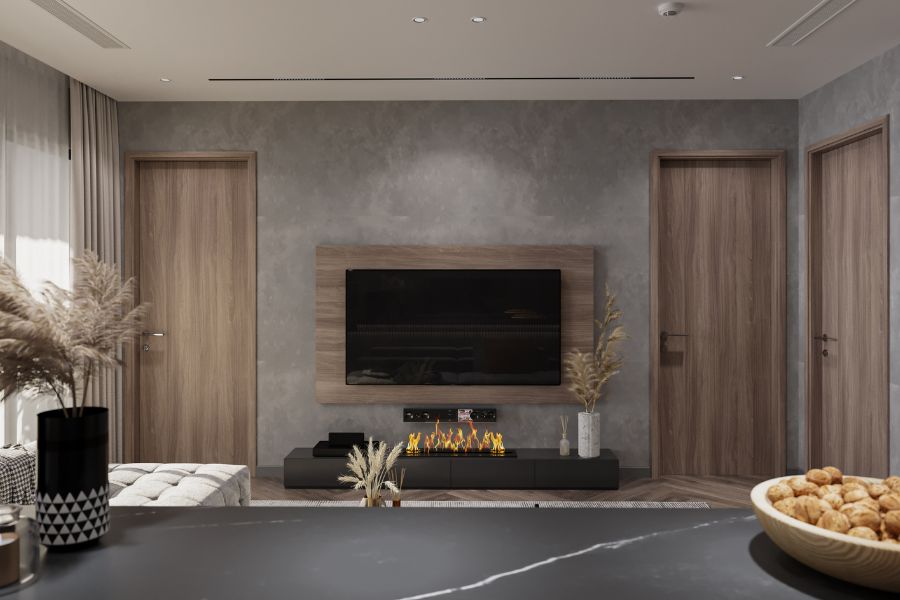
A living rooom with a tv over a fireplace

How Does TV Mounted Above Electric Fireplace Work?

In interior design and home entertainment, the trend of having a TV mounted above an electric fireplace has recently gained remarkable popularity.

This fusion of modern technology and traditional home comfort has transformed how we enjoy our living spaces. A flat-screen TV against the cozy backdrop of an electric fireplace creates a harmonious synergy that saves space and enhances the room’s overall ambiance. It’s a sight that could make a remarkable difference.

In this article, we delve into the advantages and considerations of this dynamic pairing. We’ll shed light on why more and more homeowners opt for the convenience and aesthetics of having a TV mounted above an electric fireplace.

Benefits of Mounting a TV Above an Electric Fireplace

Space-Saving Elegance

One of the primary benefits of having a TV mounted above an electric fireplace is the efficient utilization of space. Combining these two focal points creates an uncluttered, streamlined look in homes where square footage is at a premium.

This arrangement eliminates additional TV stands or cabinets, allowing for a cleaner, more open living area. Unlike wood-burning or gas fireplaces, electric fireplaces don’t require space-consuming chimneys or vents. Hence, they are perfect for this modern integration.

Enhanced Viewing Experience

Placing your TV above the electric fireplace gives an optimized viewing experience. The TV’s elevated position ensures it is at eye level when seated, reducing neck strain and providing an immersive viewing experience. Also, this setup is especially advantageous during cozy movie nights or binge-watching sessions, as it allows everyone in the room to have an unobstructed view.

Heating Efficiency and Convenience

Electric fireplaces offer the added benefit of controllable heat without the hassle of traditional wood-burning fireplaces or gas fireplaces. With electric fireplaces, you can enjoy the warmth and ambiance of a fire with just the flick of a switch or a remote control.

However, we don’t recommend having a TV above a wood-burning fireplace because it generates high heat.

Aesthetic Harmony

Mounting your TV above an electric fireplace creates a visually striking focal point, often called the “fireplace wall.” This feature transforms an ordinary living space into a captivating area where technology and home comfort coexist harmoniously.

Besides, you can frame your TV with a stylish fireplace mantel or integrate it into a custom-designed fireplace surround. The result? An overall aesthetically appealing room. Paired with styled pieces, you living space will become a remarkable work of art!

Drawbacks Of the TV mounted Above Electric Fireplace

Heat Damage

Electric fireplaces, like their traditional gas and wood-burning counterparts, emit heat. Placing a TV above an electric fireplace on the same wall exposes the TV to potential heat damage.

To mitigate this risk, follow the manufacturer’s guidelines regarding minimum clearance distances and the use of heat-resistant materials or insulation.

Viewing Angle

The perfect viewing angle can be challenging, as the TV’s height is fixed above the fireplace. Thus, you need to position the TV at the correct height for comfortable viewing while seated.

Cable Management

Managing cables and wires may be another concern. Adequate cable routing and concealment planning will help you maintain a clean and organized appearance.

Pre-Installation Planning While Mounting a TV Above a Fireplace

Here’s what you need to consider before fixing your TV above a fireplace:

Assessing Heat Output

Begin by evaluating the electric fireplace’s heat output. While electric fireplaces produce less heat than wood-burning or gas fireplaces, they can still generate excess heat.

Keep in mind that heat rises, and mounting a TV above an electric fireplace on the same wall may expose the TV to potential heat damage. Refer to the manufacturer’s guidelines for the fireplace’s heat output specifications.

Minimum Distance

To prevent heat damage and ensure the safety of your TV, determine the minimum distance recommended between the electric fireplace and the TV above it. This distance varies depending on the fireplace model. So, consult the user manual or the manufacturer for specific recommendations.

Wall Studs and Mounting Brackets

Locate and mark the wall studs within the desired mounting area. Wall studs provide the necessary support for the TV and the mounting brackets. It’s crucial to securely attach the TV mounting brackets to these studs to ensure stability.

Heat Deflection

Consider using heat-resistant materials or insulation between the electric fireplace and the TV to deflect heat away from the TV. This mitigates potential heat damage to your flat-screen TV.

Cable Management

Plan for cable management. Determine how you will route and conceal cables and wires for a clean and organized appearance. Cable raceways or in-wall routing may be necessary for a sleek and uncluttered look.

Measuring and Marking

Once you’ve completed the pre-installation planning, it’s time to take precise measurements and mark the necessary points for mounting your TV above the electric fireplace.

Measure the height you want to install the TV above the electric fireplace. The ideal height ensures comfortable viewing when seated, preventing neck strain while watching TV. Typically, the center of the TV screen should be at or slightly above eye level when installed.

Using a stud finder, mark the positions of the wall studs within the chosen mounting area. Wall studs provide the essential structural support needed to mount a TV above the fireplace securely. Next, drill pilot holes into the marked stud locations. These pilot holes will guide the installation of the mounting brackets.

Finally, plan for cable management by measuring the required cable lengths and the positions of outlets. Consider installing outlets near the TV and electric fireplace to facilitate easily concealed cable connections. Ensure you mark these locations for future reference.

Mounting the TV

Man mounting a tv

Once you have completed the pre-installation planning and marking process, it’s time to mount the TV above the electric fireplace.

Begin by securely attaching the wall mount bracket to the wall. Make sure the bracket is level and firmly anchored to the wall studs you identified during the pre-installation planning. Secure the frame with appropriate screws and anchors using the pilot holes you drilled earlier.

Now, carefully mount the TV onto the wall mount bracket. Follow the manufacturer’s instructions for your specific wall mount and TV model. It’s essential to have a helping hand during this step to ensure the TV is safely and correctly attached.

After mounting the TV, use a level to confirm that it is perfectly horizontal. Check that the TV is securely in place and doesn’t wobble or shift. Any instability will lead to an unsafe installation, especially when the TV is above an electric fireplace on the same wall.

Safety Measures

When considering a TV mounted above a fireplace, safety should be a paramount concern.

First, fire safety should be a top priority whether you have an electric or gas fireplace. Install and maintain the fireplace according to manufacturer recommendations and local building codes. Also, regularly inspect your fireplace for any wear or damage and have it serviced as needed.

Follow the recommended minimum clearance distances provided by the fireplace and TV manufacturers. These guidelines help prevent heat damage to your TV and ensure that the heat produced by the fireplace is safely dissipated. Remember that gas fireplaces may have different clearance requirements than electric ones.

In addition, consider using heat-resistant materials for the area around the fireplace wall and mantel. These materials protect against heat-related issues and enhance the safety of the TV installation. Note that heat-resistant paint and tiles are excellent choices for the fireplace wall.

If you have children or pets, take extra precautions to childproof the TV and fireplace area. Install safety gates to protect young children from the fireplace and TV, and secure cables to prevent tripping hazards. Make sure remote controls are out of reach to avoid accidental adjustments.

Ultimately, schedule regular maintenance for both the TV and the fireplace. Dust and debris can accumulate around the TV and inside the fireplace, affecting performance and safety. Cleaning and inspecting these components periodically prevents potential issues.

Conclusion

The decision to have a TV mounted above a fireplace, whether a gas fireplace or an electric one, should be made carefully considering the benefits and safety precautions.

When executed thoughtfully, this arrangement creates a captivating fireplace wall that enhances the aesthetics of your living space. It’s indeed a form of home decor that stands out. Plus, it provides an enjoyable viewing experience.

However, safety must always be a priority. So, adhere to recommended clearance distances, use heat-resistant materials, and implement childproofing measures.