TVs and Fireplaces: Why This Classic Pairing Is Causing Headaches (And How to Get It Right)
Combining TVs and fireplaces in the same room presents a classic design dilemma that homeowners and interior professionals face regularly: how to integrate two competing focal points without compromising aesthetics, safety, or viewing comfort. The most successful approach involves careful placement planning, heat management solutions, and strategic room layout that acknowledges both elements deserve prominence without one dominating the other.
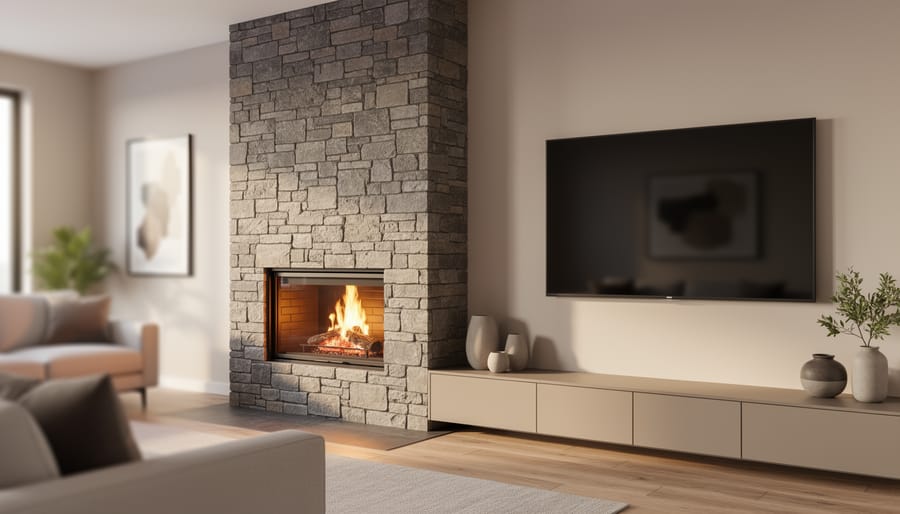
The traditional solution of mounting a television directly above a fireplace, while space-efficient, creates several problems. Heat from the fireplace can damage electronics, viewing angles force necks into uncomfortable positions, and the visual competition between flickering flames and screen content fragments attention rather than creating cohesion. Research consistently shows that optimal TV viewing height places the screen center at seated eye level, typically 42 to 48 inches from the floor, yet fireplace mantels often sit at 54 inches or higher.
Modern design approaches offer better alternatives. Positioning the TV and fireplace on perpendicular walls allows each to serve as a focal point for different seating arrangements, creating distinct zones within the same space. For rooms where adjacent wall placement isn’t possible, recessed fireplace designs with appropriate heat shielding and articulating TV mounts can work, though they require professional installation and careful product selection.
Budget considerations vary widely. Basic solutions like standalone media consoles paired with electric fireplaces start around modest investment levels, while custom millwork integrating both elements with proper ventilation and concealment systems can reach significant budgets. The key lies in understanding your specific space constraints, usage patterns, and willingness to prioritize function over convention.
The Evolution of TVs and Fireplaces in Modern Interiors
A decade ago, the question of where to put the television barely registered on most homeowners’ radar, it went above the fireplace by default, often because builders had already run the cables there. Fireplaces anchored living rooms as they had for centuries, and mounting the TV on that prominent wall seemed logical, even inevitable. Fast-forward to 2026, and this pairing has become one of interior design’s most debated topics, with perspectives shifting dramatically across different markets and design philosophies.
The transformation began around 2015, when designers and ergonomics specialists started publicly questioning the above-fireplace placement that had become residential standard practice. Scandinavian and Japanese interiors led a counter-movement, treating the fireplace as a meditative element and positioning screens on perpendicular walls or in dedicated media zones. Meanwhile, North American and Australian markets remained committed to the stacked arrangement, viewing it as a space-efficient solution that preserved open floor plans.
Successful integration of televisions and fireplaces reflects deeper cultural values, whether a home prioritizes communal entertainment or quiet contemplation as its primary gathering function.
European approaches further complicated the conversation. British and French designers often favored preserving the fireplace as the sole focal point, relegating televisions to secondary positions or hiding them in cabinetry. German and Dutch markets embraced minimalist solutions that treated both elements with equal restraint, frequently recessing screens into millwork to minimize visual competition.
By the early 2020s, property staging revealed telling patterns: homes marketed to traditional buyers still showcased the TV-over-fireplace layout, while luxury properties increasingly demonstrated alternative configurations as markers of sophisticated design thinking. This bifurcation continues in 2026, with mounting preferences now serving as subtle indicators of design philosophy rather than mere convenience. The evolution hasn’t resolved the debate, it has simply expanded the range of acceptable solutions, making thoughtful placement more important than ever.
The Real Problems with Mounting Your TV Above the Fireplace
Heat and Technical Considerations
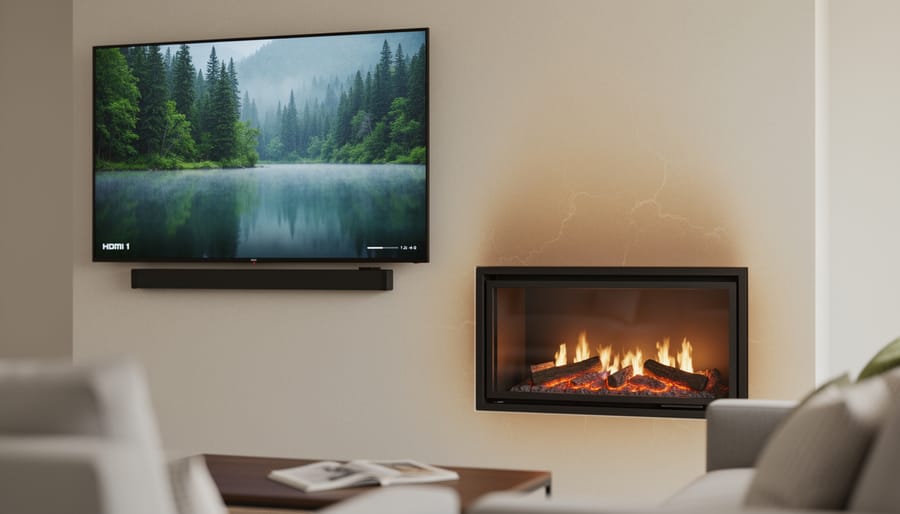
Heat poses a genuine threat to television electronics, regardless of how elegant the installation appears. Modern TVs contain sensitive components that manufacturers typically rate for operation between 0°C and 40°C (32°F to 104°F). Above a fireplace, temperatures can easily exceed these limits, particularly with wood-burning units that radiate intense heat upward.
Wood-burning fireplaces present the highest risk, generating temperatures of 200°C (400°F) or more near the opening. Gas fireplaces produce less heat but still create significant thermal stress, while electric units offer the most TV-friendly option with minimal heat output and controlled ventilation.
Safe clearance varies by fireplace type. For wood-burning installations, maintain at least 36 inches between the mantel and screen bottom, though 48 inches proves safer. Gas fireplaces require minimum 24-inch clearance, while electric units may permit closer mounting if venting allows.
Mitigation strategies include installing a mantel shelf to deflect rising heat, adding insulation behind the TV mounting area, or incorporating ventilation systems that actively cool the space. Heat shields designed specifically for this application can redirect thermal currents, though they rarely eliminate risk entirely. Professional installers should measure actual operating temperatures before finalizing any above-fireplace TV placement, regardless of clearance calculations.
Viewing Comfort and Ergonomics
The standard viewing guideline, eye level when seated, places optimal TV height between 42 and 53 inches from the floor. Above-fireplace mounting typically positions the screen 60 to 70 inches high, forcing viewers to tilt their heads back 15 to 30 degrees. Extended viewing at these angles creates neck tension, shoulder strain, and eye fatigue within an hour.
Research confirms viewing discomfort increases significantly when screens sit more than 10 degrees above eye level. Mantels at 54 inches combined with 55-inch televisions place the screen centre at roughly 81 inches, well into the discomfort zone. The farther you sit from the screen, the worse this angle becomes; distance creates steeper upward sightlines rather than mitigating them.
Room proportions matter enormously. Low ceilings exaggerate proportion issues and make elevated mounting feel oppressive. Seating distance compounds the problem: furniture pushed too far back to accommodate viewing angles sacrifices conversational intimacy, while sitting closer to reduce neck strain makes the screen overwhelming.
If your fireplace mantel exceeds 50 inches and you watch television regularly rather than occasionally, mounting above creates ergonomic problems no amount of styling can solve. Comfort drives functionality, and strained viewing positions undermine both.
Visual Balance and Proportion
Visual Balance and Proportion
Mounting a television above a fireplace creates immediate scale problems. Most modern TVs measure 55 to 75 inches diagonally, forming a dominant black rectangle that often dwarfs the fireplace below. This imbalance becomes particularly pronounced with traditional mantels, where ornate architectural details compete unsuccessfully for attention against the screen’s flat expanse.
The mantel itself presents styling challenges. Decorative objects that work beautifully alone, candlesticks, vases, framed photographs, appear cluttered and insignificant beneath a large TV. The screen’s visual weight pulls the eye upward, making anything placed on the mantel feel like an afterthought rather than intentional design.
Creating a cohesive focal point requires careful consideration of proportions. A fireplace surround needs sufficient visual presence to anchor the TV without overwhelming the space. Wide, simple mantels in contemporary materials like limestone or concrete can support larger screens better than narrow Victorian-era designs. The relationship between fireplace width and TV width matters significantly; designers typically recommend the screen span no more than two-thirds the width of the fireplace opening to maintain balance.
When both elements occupy the same vertical space, neither functions as an effective focal point. Instead, they create visual competition that fragments attention and undermines the room’s overall composition.
Smart Mounting Solutions for 2026
Motorized and Adjustable Mounting Systems
Motorized mounts offer a practical compromise for homes where placing TVs above fireplaces remains the only viable option. Pull-down mechanisms allow the screen to descend from its decorative position to eye level for comfortable viewing, then retract when not in use. These systems maintain the clean aesthetic many homeowners desire while addressing ergonomic concerns. Prices range from approximately £400 for basic manual pull-down models to £2,500+ for fully motorized systems with remote control.
Articulating arm mounts provide another solution, extending forward and tilting downward to improve viewing angles from seating areas. Quality articulating mounts support screens up to 75 inches and offer smooth adjustment, though they protrude noticeably when deployed. Professional installation is essential, as these systems require robust wall anchoring to support the extended weight safely.
For those pursuing seamless integration, TV lift mechanisms concealed within custom cabinetry or behind artwork represent the premium solution. The television rises from within the mantel or drops from a ceiling recess at the touch of a button, completely disappearing when not needed. While these installations typically start around £3,000 excluding cabinetry work, they deliver the dual focal point elegance that high-end residential and staging projects demand.
Built-In and Custom Solutions
Custom millwork represents the most elegant approach to harmonizing TVs and fireplaces, creating architectural solutions that feel intentional rather than forced. A recessed media wall with built-in cabinetry can lower the television to proper viewing height while maintaining visual connection with the fireplace below, transforming two competing elements into a unified focal point.
Floor-to-ceiling millwork surrounding both fireplace and TV allows designers to control proportions, integrate hidden cable management, and provide flanking storage that balances the composition. These installations work particularly well in new construction or major renovations where structural modifications are feasible.
Budget expectations vary significantly by project scale. Simple painted MDF surrounds with basic recesses start around $3,000, $5,000, while fully custom hardwood installations with sophisticated lighting and concealed mounts range from $15,000, $40,000 or more. International projects may see different price points based on local labor costs and material availability.
The investment pays dividends in resale value and daily enjoyment. Well-executed built-ins eliminate the awkward “TV stuck above fireplace” look entirely, creating architecture that serves both functions without compromise. For clients committed to keeping both elements in the same sightline, custom solutions deliver results that retrofit hardware simply cannot match.
Alternative Configurations That Work Better
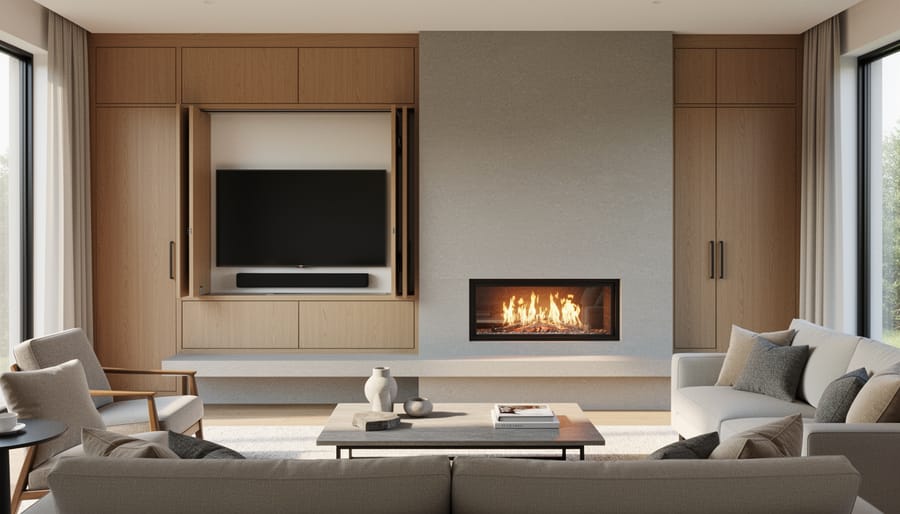
When the traditional above-the-fireplace mounting doesn’t work for your space, several smarter configurations can give you both a functional media center and a beautiful fireplace without forcing them into an awkward marriage.
The most straightforward alternative is placing your TV on an adjacent wall perpendicular to the fireplace. This arrangement lets each element breathe as its own focal point while keeping both fully functional. In many living rooms, this creates natural conversation zones, one centered on the fireplace for intimate gatherings, another oriented toward the TV for entertainment. The key is arranging furniture to accommodate both viewing scenarios, typically with a sectional or swivel chairs that can pivot between the two areas. This layout works particularly well in larger rooms where you have wall space to spare and can establish distinct zones without the room feeling fragmented.
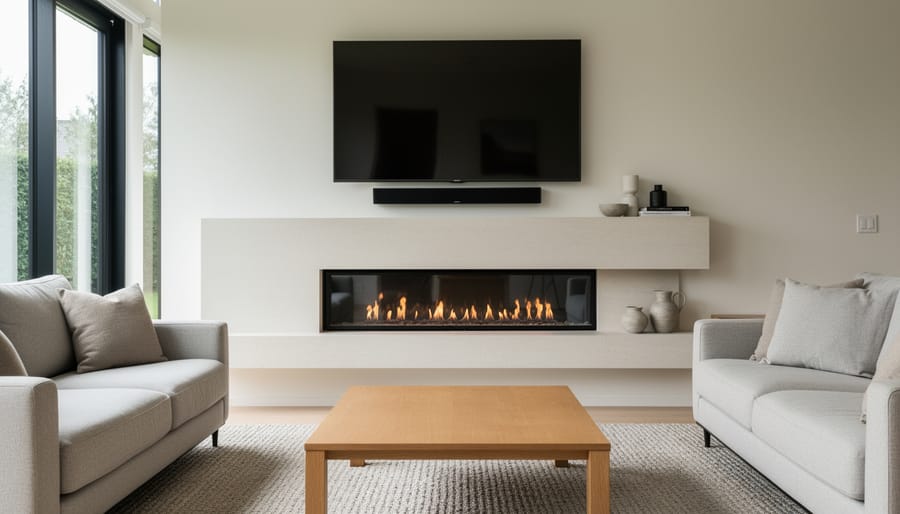
Side-by-side placement on the same wall offers another elegant solution, particularly when you have a wide enough span to maintain proper proportions. Built-in cabinetry or millwork that frames both elements creates visual unity while keeping the TV at proper eye level. This approach works best with linear fireplaces or when you can design the architecture from scratch to accommodate both. The fireplace might occupy one third of the wall while the TV and surrounding storage take the remaining space, creating a balanced media wall that feels intentional rather than compromised.
For rooms with limited wall options, consider placing the TV in a built-in unit on the wall opposite the fireplace. Yes, this means your back is to the fireplace while watching television, but it positions the screen at optimal height and viewing distance. During non-viewing hours, the fireplace remains the room’s visual anchor. This configuration is common in European design, where fireplaces often occupy prominent positions while televisions are treated as functional equipment to be concealed when not in use.
Corner fireplaces present unique opportunities for diagonal furniture arrangements that orient seating toward both elements without stacking them vertically. The TV can go on an adjacent wall at proper height while the angled fireplace maintains its presence as an architectural feature. This layout maximizes usable floor space in smaller rooms while solving the dual-focal-point challenge.
Making It Work: Professional Guidelines for Success
When mounting above a fireplace is truly your only viable configuration, professional execution becomes essential. Start by assembling the right team: a licensed electrician to ensure safe power routing away from heat zones, an experienced installer familiar with fireplace-specific mounting requirements, and ideally a designer who understands both technical constraints and visual proportion. This collaborative approach prevents costly mistakes and ensures the installation meets safety standards while achieving a polished result.
Specify a minimum 12-inch clearance between the fireplace opening and the TV bottom edge, more for wood-burning units. Install a proper mantel or heat shield if one doesn’t exist; this physical barrier deflects rising heat and protects your investment. Insist on a full-motion mount that allows downward tilting of at least 15 degrees, reducing neck strain during extended viewing. This adjustment makes a significant difference in comfort, particularly in rooms where seating is fixed.
Budget for professional installation rather than attempting DIY. Installers experienced with fireplace mounts understand how to locate studs around masonry, run concealed wiring that meets code, and position the screen at the optimal compromise height. Expect to invest between $300 and $800 for professional mounting services, depending on complexity and regional rates. Custom millwork to frame the TV and create visual cohesion adds another $1,500 to $5,000, but transforms an awkward pairing into an intentional design feature.
For properties being prepared for sale, consider how this setup reads to potential buyers. Home staging professionals often recommend neutral, low-profile screens and uncluttered mantels that don’t distract from the architecture itself. Remote virtual styling consultations can provide objective perspective on whether your current configuration enhances or detracts from the room’s overall appeal, offering cost-effective guidance before committing to permanent installations.
Styling and Staging Considerations
When staging properties for sale, the relationship between TVs and fireplaces becomes a strategic decision rather than a lifestyle choice. Professional stagers routinely remove or conceal televisions entirely when preparing homes for market, recognizing that buyers need to envision their own lives rather than focus on the seller’s entertainment setup. This approach helps properties sell faster by eliminating the visual clutter and dated mounting choices that can age a space.
| Property Type | TV Approach | Fireplace Styling |
|---|---|---|
| Owner-Occupied Home | Prominent, optimized for daily viewing comfort | Secondary to TV function; mantel styled around screen presence |
| Luxury Market Staging | Concealed in millwork or frame mounts; lifestyle imagery emphasized | Primary focal point with curated art and minimal decor accessories |
| Quick-Sale Staging | Removed entirely; wall left neutral or decorated as gallery space | Styled to showcase architectural appeal with budget-friendly seasonal vignettes |
International staging trends reveal diverging philosophies. European markets typically favor minimalist decor that positions the fireplace as an architectural statement, often leaving walls above mantels bare or featuring single pieces of original art. North American staging leans toward lifestyle vignettes that balance technology acknowledgment with aspiration. Australian and New Zealand stagers frequently highlight outdoor views through strategic furniture placement, allowing fireplaces to anchor conversation zones while keeping screens peripheral.
For permanent residences, our approach at Tarlo & Graham centers on collaboration between homeowners’ daily habits and long-term design integrity. We work with clients to create flexible solutions where technology enhances rather than dominates, frame TVs that display artwork when idle, motorized lifts concealed within custom cabinetry, or room layouts that give equal importance to both elements without forcing one above the other. The goal is always balance: spaces that function beautifully for real life while maintaining the timeless elegance that makes a house feel like a carefully considered home.
The relationship between TVs and fireplaces doesn’t have to be adversarial. With careful planning and an honest assessment of your space, these two elements can coexist beautifully without sacrificing comfort or style.
Success starts with asking the right questions early. What’s the primary function of the room? How do you actually use the space? What’s your budget for both installation and potential custom solutions? These answers, combined with professional input from designers and installers, will guide you toward a configuration that works for your specific situation rather than following a trend that may not suit your home.
Remember that the “right” solution varies dramatically from one space to another. A period property in London requires different considerations than a new-build apartment in Sydney. A family media room has different priorities than a formal living space being staged for sale. There’s no universal formula, and that’s precisely why cookie-cutter approaches so often disappoint.
Whether you choose a traditional above-mantel mount with proper heat shielding, invest in a motorized system that adjusts for optimal viewing, or opt for an alternative layout that gives each element its own moment to shine, the key is intentionality. Make decisions based on how you live, not just how a room photographs.
The best integration of TVs and fireplaces is one that serves your lifestyle first, respects the architecture of your space, and brings you genuine pleasure every time you walk into the room.