Contemporary Home Decor Accessories That Transform Spaces in 2026
Contemporary home accessories in 2026 center on sculptural forms, organic materials, and nuanced neutral palettes that create visual interest without overwhelming a space. The shift from minimalism toward what designers now call “refined warmth” means accessories serve as intentional focal points rather than mere afterthoughts.
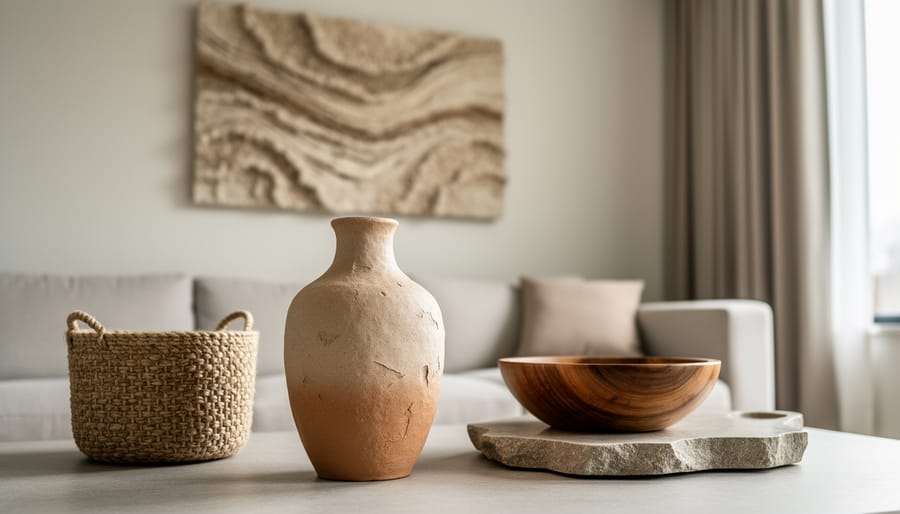
Start by anchoring each room with one statement piece. A hand-thrown ceramic vase in an irregular shape, a textured wall sculpture in natural fibers, or an architectural lighting fixture immediately establishes contemporary credibility. These investment pieces typically range from $150 to $800 and set the tone for everything else in the room.
Layer in functional accessories that display craftsmanship. Think handwoven baskets in varying heights, wooden bowls with visible grain patterns, or stone trays with organic edges. The contemporary aesthetic values pieces that tell a story of their making, where you can see the artist’s hand in slight variations and imperfections.
Balance hard and soft textures within each vignette. Pair smooth glass objects with rough linen, sleek metal frames with woven elements, polished surfaces with matte finishes. This textural conversation creates depth that photographs beautifully for listings and feels sophisticated in person.
Contemporary accessories work across budgets when you understand the principles. A $40 artisan candle holder and a $400 gallery sculpture both succeed if they share the same material honesty and sculptural quality. The key lies in editing ruthlessly. Three carefully chosen accessories create more impact than ten generic ones competing for attention.
The Evolution of Contemporary Accessories in 2026
Contemporary accessories have undergone a fundamental shift over the past few years, moving from afterthoughts that fill empty shelves to intentional design tools that define a space’s character. This transformation reflects a broader maturation of the contemporary aesthetic itself: rather than relying solely on architectural elements and furniture to create atmosphere, designers now view accessories as strategic layers that communicate sophistication, establish visual rhythm, and complete the narrative of a room.
The major design events of early 2026 confirmed this evolution with remarkable consistency. At Maison & Objet in Paris (January 15-19, 2026), exhibitors showcased accessories conceived as sculptural statements and textural counterpoints rather than mere embellishments. The Maison & Objet 2026 trends emphasized materiality, craft, and presence, qualities that position accessories as essential components of contemporary interiors. Just days later, IMM Cologne (January 20-23, 2026) reinforced these directions, with German and European manufacturers demonstrating how accessories bridge minimalist architecture and human warmth through carefully calibrated scale and finish.
This international perspective matters because contemporary design draws from global influences, and the accessory market reflects that cross-pollination. What we’re seeing in 2026 isn’t a single trend but a convergence: sustainable materials from Scandinavian makers, artisanal ceramics influenced by Japanese minimalism, textural weavings rooted in Mediterranean craft traditions. These pieces work together because they share underlying principles, restraint, quality, and intentionality, rather than matching aesthetics.
The upcoming High Point Market in North Carolina (October 17-21, 2026) will likely reinforce how North American designers adapt these international directions for local markets, demonstrating that contemporary accessorizing transcends geography while respecting regional preferences. The strategic approach has become universal: accessories now shape spatial perception, guide the eye, and establish emotional tone with the same deliberation once reserved for major furniture selections.
Essential Contemporary Accessory Categories for Every Space
Textiles and Soft Furnishings
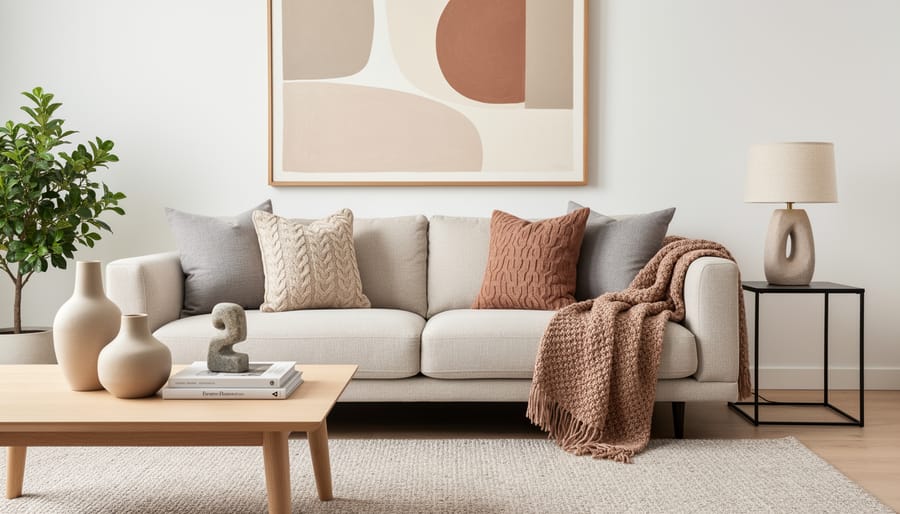
Contemporary textiles layer depth and warmth into minimalist frameworks through deliberate choices in texture rather than busy patterns. A linen throw in warm taupe draped over a charcoal sofa introduces tactile interest without visual noise, while velvet pillows in muted sage or terracotta provide strategic color accents that can shift seasonally. Handwoven wool rugs anchor seating areas with organic texture, their subtle variations in tone creating movement underfoot. Window treatments favor natural fabrics, sheer linen panels that filter light or heavyweight cotton drapes in neutral tones, avoiding fussy hardware in favor of sleek rods or recessed tracks that complement TV placement and architectural lines.
Budget-conscious approaches focus investment on foundational pieces like quality rugs that withstand traffic, while rotating lower-cost pillows and throws to refresh a space affordably. Mid-range textiles from established home retailers balance durability with contemporary aesthetics, whereas luxury natural fibers, Belgian linen, cashmere blends, hand-knotted silk, elevate spaces intended for long-term living or high-end staging. The key lies in mixing textures rather than relying on a single finish, creating layered sophistication that feels curated rather than matched.
Sculptural and Artistic Elements
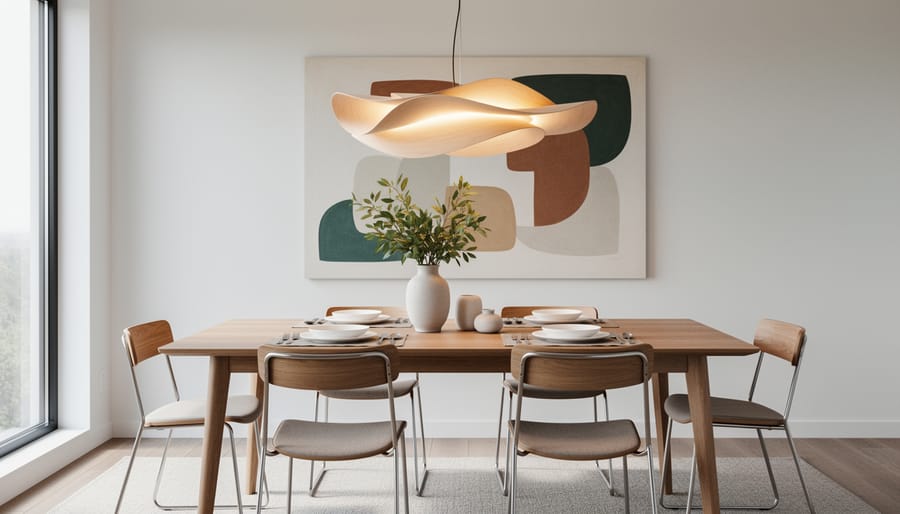
Contemporary spaces come alive when sculptural and artistic elements introduce personality without overwhelming the clean-lined foundation. Abstract sculptures in organic forms, smooth ceramics, wire compositions, geometric metal pieces, serve as focal points that draw the eye while maintaining the restrained elegance central to contemporary design. The key lies in selecting statement pieces with intention: a single substantial sculpture on a console table commands more impact than three small objects competing for attention.
Scale matters profoundly in contemporary accessorizing. Oversized art objects work beautifully in open-plan living areas where ceiling height and square footage can accommodate drama, while smaller sculptures suit intimate vignettes on shelving or side tables. Placement should respect negative space, the breathing room that prevents contemporary interiors from feeling cluttered. Position sculptural pieces where sightlines naturally land, entryway tables, fireplace mantels, or floating shelves flanking windows.
Contemporary styling encourages confidence in artistic choices. You can mix old and new by pairing a vintage bronze sculpture with sleek acrylic accents, creating layers of interest that feel curated rather than matched. The balance between boldness and restraint defines success: choose one or two statement artistic pieces per room, then support them with simpler accessories that complement rather than compete. This disciplined approach creates spaces that feel intentional, sophisticated, and genuinely contemporary.
Organic and Natural Accents
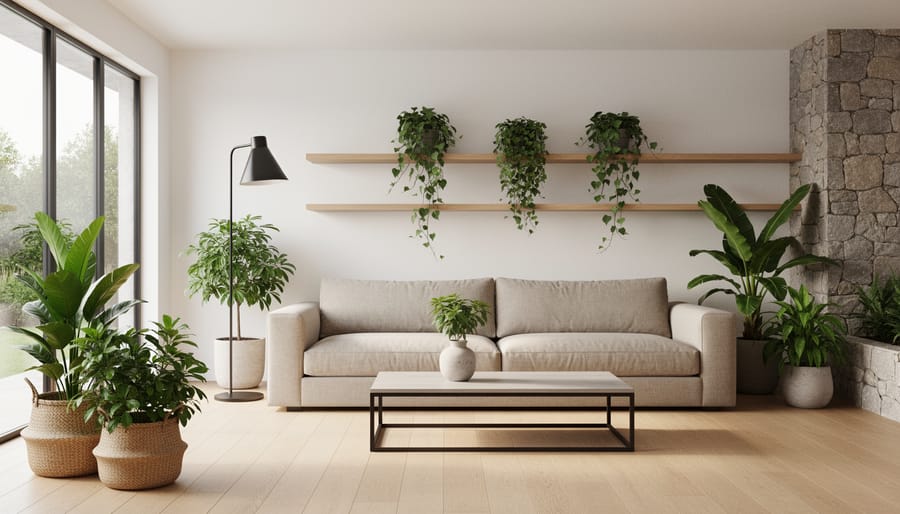
Organic materials and living elements ground contemporary spaces in nature without compromising clean aesthetics. Natural stone vessels, wooden bowls in sculptural forms, and handwoven baskets serve as textural counterpoints to sleek surfaces. Live plants, particularly sculptural specimens like fiddle-leaf figs, bird of paradise, or architectural succulents, introduce organic movement and purify air while maintaining the refined lines contemporary design demands. The key is restraint: select a few statement plantings rather than cluttering surfaces with greenery.
Material choices matter. Terracotta planters in matte finishes, ceramic vessels with organic glazes, and woven fiber accents deliver warmth without competing with a room’s focal points. Dried botanical arrangements, particularly pampas grass and preserved branches, offer low-maintenance alternatives that maintain visual interest year-round.
For real estate staging, opt for high-quality artificial plants and permanent organic materials like polished stone objects or woven pieces that require no upkeep between showings. Reserve living plants for occupied homes where owners can maintain them, or use them strategically during open houses and photography sessions before removing them. Property developers should install self-watering planters or hardy, drought-tolerant species in common areas, balancing biophilic benefits with practical maintenance realities across turnover cycles.
Color, Texture, and Material Trends Shaping 2026
The palette of contemporary accessories in 2026 reflects a sophisticated evolution toward tactile richness and environmental consciousness. Insights from Maison & Objet (January 15-19, 2026) and IMM Cologne (January 20-23, 2026) reveal a design landscape where material authenticity trumps surface perfection, and where the interplay of texture creates visual interest within restrained color schemes.
Sustainable materials have moved from niche consideration to foundational choice. Reclaimed wood accessories, recycled glass vessels, and naturally dyed textiles appear throughout contemporary spaces, offering both ethical credibility and genuine character. These materials carry inherent irregularities, grain variations, subtle color shifts, organic imperfections, that prevent spaces from feeling sterile or overly curated. The contemporary aesthetic now embraces these authentic markers rather than concealing them.
Mixed metals continue their dominance, but 2026 brings nuance to the approach. Rather than the bold brass-meets-chrome contrasts of previous years, current applications layer warmer tones, brushed brass with antique bronze, champagne gold with weathered copper, creating depth without jarring transitions. This subtlety allows metal accents to anchor contemporary spaces without dominating them, particularly effective in accessories like candleholders, picture frames, and decorative bowls.
Natural stone has emerged as the textural hero of contemporary accessorizing. Marble, travertine, onyx, and limestone appear in accessories ranging from bookends to serving pieces, their veining and mineral deposits providing organic artistry. Designers favor unfilled travertine and honed finishes over polished surfaces, embracing the material’s natural porosity and texture. These stone pieces pair beautifully with aged superior pieces creating layered narratives within curated vignettes.
| Material | Aesthetic Qualities | Ideal Applications | Budget Range |
|---|---|---|---|
| Natural Stone | Organic veining, tactile weight, mineral depth | Sculptural objects, trays, bookends | Moderate to high |
| Artisanal Ceramics | Handcrafted texture, glaze variations, matte finishes | Vases, bowls, decorative vessels | Moderate |
| Mixed Metals | Warm tonal layering, refined industrial edge | Candleholders, frames, hardware | Low to moderate |
| Reclaimed Wood | Authentic patina, grain character, sustainability story | Accent furniture, wall art, serving pieces | Low to high |
Artisanal ceramics represent perhaps the most significant shift in contemporary accessorizing. The hand-thrown vessel with visible throwing lines, the platter with uneven glaze pooling, the sculptural piece with intentional asymmetry, these imperfect objects inject humanity into minimalist frameworks. Neutral-toned ceramics in warm whites, soft grays, and earthy taupes dominate, their subtle variations creating visual interest without chromatic disruption.
The neutral palette itself has deepened and warmed. While stark white and cool gray remain foundational, 2026 accessories increasingly incorporate greige (gray-beige hybrids), warm putty tones, soft caramels, and muted terracotta. These warmer neutrals prevent contemporary spaces from reading as cold or institutional, particularly when layered across multiple accessory types. Strategic color appears through single statement pieces, a deep forest green vase, a burnt orange throw, rather than coordinated sets.
This material and color evolution creates contemporary elegance that transcends passing trends. By grounding accessory choices in natural materials with inherent longevity and timeless neutral palettes punctuated by considered color, these selections maintain relevance across shifting design cycles.
Accessorizing for Different Purposes: Selling, Living, and Investing
Property Staging: Accessories That Sell
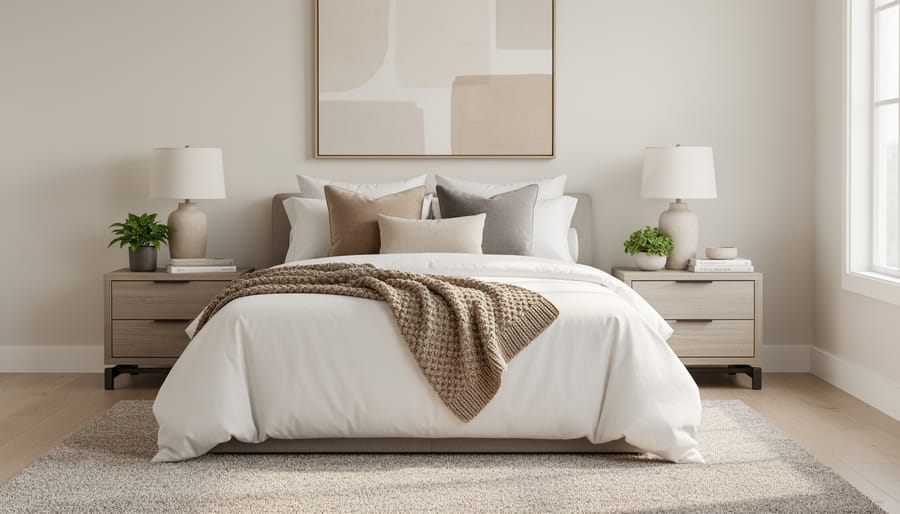
When staging properties to sell faster accessories function as emotional triggers that help potential buyers envision themselves in the space. The key is selecting pieces that create warmth and sophistication without projecting a specific homeowner’s personality. Start with textiles: a cashmere-look throw in soft gray or warm beige draped over a sofa adds instant luxury for under $60, while oversized neutral pillows in varied textures (linen, cotton velvet, chunky weave) create visual interest at minimal cost.
Coffee table styling demonstrates professional attention to detail. A simple vignette, a sculptural bowl in matte ceramic, two hardcover design books with neutral covers, and a small arrangement of dried grasses, costs roughly $100 but signals contemporary taste. In bedrooms, quality white bedding with a single textured throw and two matching statement lamps creates hotel-like serenity. Avoid personal photographs, bold colors, or culturally specific art; instead, choose abstract prints in muted tones or simple botanical line drawings that complement any buyer’s vision while maintaining contemporary elegance.
Personal Styling: Reflecting Individual Identity
While staging demands broad appeal, personal styling invites homeowners to infuse contemporary spaces with meaningful artifacts that tell their story. The clean-lined contemporary framework becomes a canvas rather than a constraint, where carefully chosen accessories reveal personality without creating visual chaos.
Professional stylists approach personal accessory selection as collaborative discovery, exploring clients’ travel memories, artistic passions, and daily rituals to identify pieces that resonate authentically. A ceramicist’s collection might anchor a contemporary living room, or heirloom textiles could introduce warmth to minimalist bedrooms. The contemporary aesthetic accommodates these personal treasures when they share tonal harmony or sculptural quality with the overall design language.
Personal shopping services extend beyond simply selecting accessories to understanding how pieces will function in daily life. Does the homeowner entertain frequently, requiring conversation-starting objects? Do they seek calming environments that prioritize negative space? This individualized approach ensures accessories enhance lived experience rather than merely filling shelves, transforming contemporary spaces into deeply personal sanctuaries that still maintain the aesthetic’s signature sophistication.
Investment Properties: Durability Meets Design
Investment properties present a unique accessorizing challenge: pieces must project contemporary appeal while surviving multiple tenants and frequent cleanings. Property developers and managers benefit from selecting accessories that prioritize durability without sacrificing style, think tempered glass vases over delicate ceramic, performance fabrics in neutral tones, and metal sculptural pieces that withstand handling. This approach mirrors the principles of everlasting decor where timelessness and resilience converge. Focus investment on a few substantial pieces, a quality area rug in a forgiving pattern, substantial lamps with replaceable components, framed prints behind protective glass, rather than numerous fragile items. Budget-conscious strategies include purchasing multiples of identical accessories for quick replacement and selecting finishes that hide wear, such as matte blacks and brushed metals rather than polished surfaces that show fingerprints.
The Art of Curation: How Professionals Select and Place Accessories
Styling spaces with contemporary accessories isn’t about filling every surface. It’s about deliberate choices that guide the eye and create moments of visual interest throughout a room. At Loand Styles, our collaborative process, whether working hands-on or virtually across continents, follows principles refined through hundreds of styling projects for homeowners, agents, and developers.
Start with the rule of three, a foundational concept where objects grouped in odd numbers create more engaging compositions than pairs or even-numbered groupings. Three varying-height candlesticks on a dining table, a trio of ceramic vessels on open shelving, or three framed prints arranged vertically on a wall all feel naturally balanced without appearing too studied. This principle extends beyond literal groupings, think of three distinct textures within one vignette or three subtle color echoes across a room.
Visual weight matters as much as physical size. A single black sculptural piece carries more visual weight than three pale linen pillows, even if the pillows occupy more space. Professionals distribute this weight intentionally: balance a bold floor lamp on one side of a seating area with a gallery wall opposite, or counter a heavy console table with a substantial mirror above it. Ignoring visual weight creates spaces that feel lopsided, no matter how carefully you’ve measured.
Negative space, the breathing room between and around objects, defines contemporary styling more than the accessories themselves. When clients struggle with accessorizing, they’ve typically overcrowded surfaces. We remove half the items, and suddenly everything becomes visible. That sculptural bowl needs empty space around it to register as art rather than clutter.
The curation process professionals use follows a systematic approach:
- Assess sightlines from entry points and primary seating positions, noting what the eye encounters first in each space
- Establish focal points in each room, fireplace mantels, console tables, coffee tables, as anchoring locations for key accessories
- Select hero pieces first (statement sculptures, significant art, distinctive lighting) that set the room’s accessory tone
- Layer supporting elements that vary in height, texture, and scale around each hero piece without competing with it
- Step back after each addition to view the composition from multiple angles, removing anything that disrupts balance
- Photograph the space to identify what works and what reads as visual noise through the camera lens
This systematic approach proves especially valuable in virtual styling consultations, where Loand Styles collaborates with international clients through detailed room assessments, curated shopping lists, and placement guidance delivered remotely. The same principles that create impact in person translate through screens when applied methodically.
Creating vignettes, small, composed moments on side tables, shelves, or credenzas, requires layering with intention. Combine varying heights (a tall vase with low stack of books), mix materials (smooth glass with rough ceramic), and include one organic element (fresh stems or sculptural branch). Each vignette should feel complete yet effortless, as if these objects naturally gravitated together rather than being arranged.
Professional accessorizing recognizes that less execution time doesn’t mean less expertise. The ability to edit ruthlessly, knowing which three accessories will outperform ten mediocre ones, comes from understanding how visual principles interact with a room’s architecture, light quality, and purpose.
Budget-Conscious Contemporary Accessorizing
Contemporary styling doesn’t require luxury budgets. Strategic spending delivers high-impact results across any price point, from property staging projects with tight margins to personal styling where homeowners want to refresh gradually. The key lies in understanding where investment yields the greatest visual return and where economizing maintains quality without compromising the clean-lined aesthetic that defines contemporary design.
Invest in pieces that anchor a room and endure changing trends. Quality textiles, a handwoven wool rug, Belgian linen window treatments, or textured throws in natural fibers, form the tactile foundation that cheaper alternatives can’t replicate. These pieces wear better, photograph well for property listings, and justify their cost through longevity. Similarly, statement lighting and one significant sculptural object per room create focal points worth the expense. A well-designed ceramic vessel or abstract metal sculpture commands attention in ways that multiple smaller items never will.
Economize on accessories that layer around these investments. Affordable contemporary options abound in throw pillows, smaller ceramic pieces, and botanical accents. Mix a luxury cashmere throw with budget linen pillows in similar tones. Pair an investment art piece with inexpensive glass votives and natural wood trays. High-street retailers now offer clean-lined accessories that read contemporary when curated thoughtfully, especially in neutral palettes where material quality matters less than form and proportion.
The professional approach treats accessorizing as editing. Three carefully chosen pieces at varied price points outperform ten mediocre items at the same total cost. For staging, this means investing in versatile neutrals that work across multiple properties while rotating in fresh, budget-friendly accents for each listing. For personal projects, it means building slowly with intentional purchases rather than filling space quickly with forgettable objects. Contemporary elegance rewards restraint and strategic choices over sheer abundance, making it surprisingly accessible regardless of budget constraints.
Contemporary home decor accessories aren’t afterthoughts, they’re the defining touches that transform architectural shells into spaces that feel complete, whether you’re preparing a property for market, creating your personal sanctuary, or curating an investment that endures. These carefully chosen elements bridge the gap between impersonal and inviting, between functional and extraordinary.
At Loand Styles, we bring international design perspective and collaborative expertise to every accessorizing project. From hands-on styling sessions to virtual consultations that connect you with professional guidance regardless of location, we work alongside homeowners, real estate agents, and property developers to select contemporary accessories that achieve specific goals. Our approach combines the aesthetic insights drawn from major design events worldwide with the practical realities of your budget, timeline, and purpose.
The right contemporary accessories elevate spaces in measurable ways, increasing property appeal, expressing authentic personal style, or creating rental environments that attract and retain quality tenants. Explore how professional styling services can transform your space through the strategic art of contemporary accessorizing.